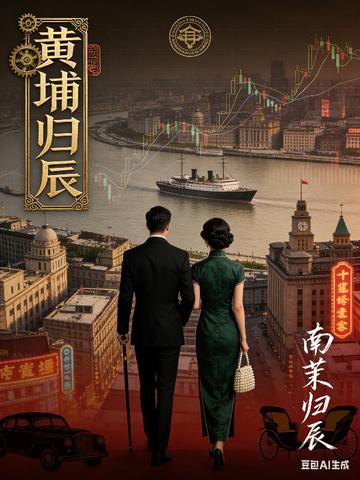
In Shanghai during the Republic of China, the ten-mile foreign market was turbulent and turbulent. The three major families of Bai, Mu, and Chen stood side by side, with grievances and grievances intertwined. Once the Mu family's shipping line capsized, the young master's family died on the streets, the owner and his wife died with hatred, and the daughter Mu Ziyan fell from the clouds to hell. All that remained was hatred directed at the person she was engaged to in the past - Bai Yichen.
Bai Yichen, who was born in Huangpu, held the military power of the Bai family and was very high-spirited. However, he was framed by the traitor Bai Zhong and mistakenly believed that the Mu family was collaborating with the enemy. He personally pushed his best friend's family into the abyss. When the truth is revealed layer by layer, Bai Zhong surrenders to the law, and the conspiracy behind the Chen family is revealed. He is filled with regret and can only seek a chance to atone with his blood and life.
Chen Wanshan was so scheming that he used a knife to kill people to disrupt the situation in Shanghai, seek to seize property, and torture the people. When the Japanese invaders trampled the mountains and rivers with their iron hooves, he turned to the foreign enemy for his own selfish enmity, willing to become a traitor, and became a national sinner.
Personal hatred is raging, national hatred is overwhelming, and the former life and death enemies finally put aside their grudges when the mountains and rivers are in turmoil. Mu Ziyan used the remnants of the Mu family to gather momentum and outsmart the Chen family; Bai Yichen used Huangpu's iron and blood as his blade to turn the tide. From the overt and covert fighting at the Huangpu River dock to the bloody battle on the Songhu battlefield, the two worked hand in hand to fight against foreign invaders with the strength of their family and defend their homeland with their flesh and blood.
After all, the grievances and grievances of aristocratic families are no match for the national justice, and personal feelings and grievances are all integrated into the attempt to save the nation. Huangpu has returned to dust, but its original intention has not changed. The children of the Republic of China, in the flames of war, cast their backbone with their strength of character, protected the mountains and rivers with sincerity, and wrote a heroic song about the love of the family and the country, and the safety of the mountains and rivers.