The breeze in the seventies always carried the scent of locust blossoms. Beneath the old locust tree, the stone mill turned round and round, grinding life into fine powder mixed with sweat, laughter, and sweets hidden away in secret.
As Shen Xiangyang crossed the threshing ground with a canvas bag over her shoulder, the ends of her braids brushed against the bamboo basket full of wild greens. Tied around her wrist was a red cord holding a smooth piece of locust wood. Her father had carved it for her the year he left. He'd said, “Sunflowers follow the sun, and we follow the days.”
Li Jianguo, who lived next door, always liked to lean against the locust tree and watch her. His army-green jacket had been washed pale, and he would twirl a locust seed in his hand, then cough on purpose as she passed. But whenever she turned around, his ears would turn red. Nian'an, the team leader's daughter, was always pestering her to tell the stories brought by the educated youth from the city. She hid a roasted sweet potato in her pocket, so hot that she kept shifting it from hand to hand.
The locust blossoms bloomed and fell, landing on the stone mill, on Shen Xiangyang's canvas bag, and on the patch of fabric Li Jianguo pretended to hand her casually. The red cord grew shiny with wear, and the locust-wood charm grew warm from her body heat. Life slowly unfolded like a sunflower turning toward the light: an extra half-scoop of cornmeal at grain distribution, an army jacket mended beneath a kerosene lamp at night, dried locust blossoms tucked into a poetry book brought by an educated youth, and a tiny sunflower Li Jianguo finally dared to give her, carved from locust wood.
In that modest but steady era, the old locust tree stood as a silent witness, watching a group of young people sweeten their hard lives and weave little moments of warmth into red cords. Every ordinary day, like a sunflower, reached toward the light, striving to bloom a little more.
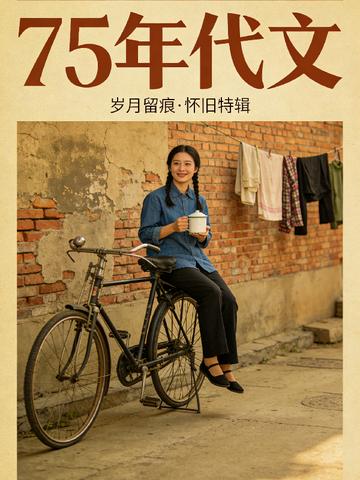



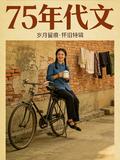
"Sunflowers Under the Locust Tree in the 1970s" is like a handful of new wheat with morning dew, its simplicity hides moving power. There are no earth-shattering adventures, but the bond between the land and people's hearts is clearly written in the daily life of seedling raising, ear heading, and harvest. Shen Zhiyan takes "Xuemai No. 1" To take root in the countryside. Grandma Chen's wheat straw craftsmanship, Uncle Zhang's old plow, and the children's dreams of wheat fields. Each character is like a weed on the field ridge, ordinary but full of tenacity. The most touching thing is the wisdom of "taking your time" - wheat needs to go through wind and rain before it will be full, and life must be lived carefully before it can be steady. When the wheat waves turn to gold, we not only see the joy of a good harvest, but also the warmth of a group of people planting hope into the land with their hands. This is not the end, it is a new beginning, just like wheat seeds falling to the ground, there is always something to look forward to next season.