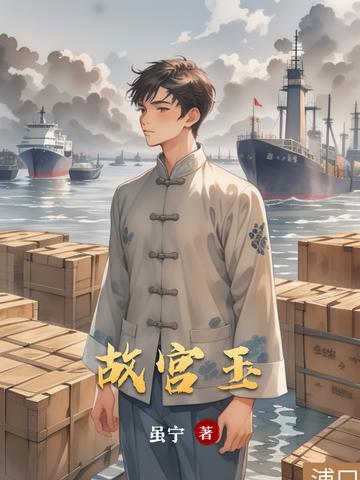
In 1933, a young staff member of the National Palace Museum in Peking, Shen Yan, broke with his mentor who advocated that "cultural relics should be left behind to stabilize the people's hearts" during the national debate over "whether the cultural relics of the Forbidden City should be warred or moved." He resolutely joined the escort team for relocating cultural relics to the south.
On the eve of the fall of Nanjing in 1937, Silent Yan faced the cruelest choice in life by the river:
On one side is the westward-moving freighter that is about to depart, carrying ten-sided stone drums engraved with thousands of years of Chinese written memory;
On the other side was his wife and young son who had been waiting for several days but were still missing.
Finally, he chose to board the ship.
In the next eight years, he traveled with Shigu to Xuzhou, Zhengzhou, Baoji, Hanzhong, and over the snowy Qinling Mountains, finally dormant in a dilapidated ancestral hall in the countryside of Emei, Sichuan.
Isolated from the world, he rummaged through cultural relics in a humid warehouse every day, fighting against pests, termites and loneliness.
The jade ring that his wife gave him when she was leaving has become his only thought about his family.
When a child from the Emei Mountain area asked him, "What are these broken stones," he replied, "These are our roots."
When the Japanese army approached, he wrote a suicide note and prepared to die with the cultural relics.
When the Anti-Japanese War was victorious, he returned to Nanjing with the ten-sided stone drum intact. In the warehouse of Chaotian Palace, facing the wooden box that had been preserved for twelve years, he finally understood:
From the moment he jumped on board, his destiny was integrated with these ten-sided stone drums.
Protecting them means protecting the future for which my wife and son are heading.