8.15 Introduction update: This article appears alternately with the theatrical version on a daily basis. Friends often report that they prefer the theatrical version. In principle, it will not be affected by skipping to watch it.
5.25 Introduction update: Xiong Jing's CP is locked, and the heroine has no CP. Someone on station b advertised that Maruko-chan and Nobita are a couple, but the author has no such idea.
—————————
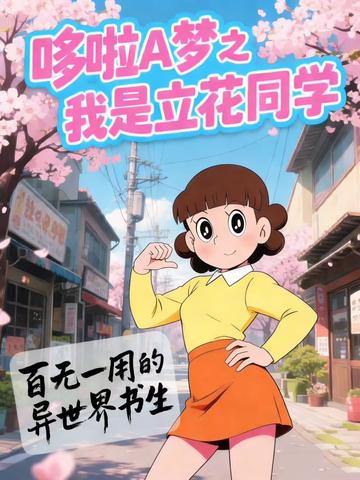
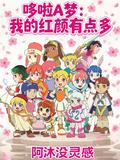
The 22-year-old Japanese female worker died of overwork and actually traveled into the world of Doraemon!
Moreover, instead of traveling through time to become the protagonist group, they became passers-by and classmates in the original work!
As a die-hard fan of Doraemon, wouldn't it be a pity not to personally participate in one fantastic story after another?
At the same time, even a story for all ages like Doraemon will have various connotations. If I could repair these with my own strength, wouldn't it be a beautiful thing?
Reader comments
This fanfic does not use the common "rudely destroying the plot" style of time travel, but creatively constructs a set of "world rules" - time is stagnant in fifth grade, and the characters' personalities and relationships will be dynamically adjusted to fit the current "story". This kind of meta-narrative setting makes every "interference" of Maruko-chan carry the risk of dancing on the tip of a knife: she has to use her precognitive advantage to correct the tragedy, and she also has to pretend to be the monitor who "happens to pass by". From the gentleness of "Memory Bread" to the sternness of "Devil's Passport", her action trajectory accurately depicts the difficult balance of the "insider" - saving friends without destroying the "inevitability" of the story.
Tachibana Maruyo's existence as a time traveler brings a "meta-narrative" dimension to every theatrical version. She knows the direction of the plot, but has to hide this knowledge and maintain a delicate balance between "known" and "should be". This setting allows readers to experience two perspectives at the same time: reliving the familiar adventure as an audience, and observing the details omitted in the original work through the eyes of the traveler - the moonlight of the Cretaceous, the wonder of the twin moons in the wilderness star, and the tranquility of the leaf boat flowing down the river.
This duality is also reflected in her awareness of the "limits of intervention." In the Cretaceous, she knew that the time machine was about to malfunction but did not warn in advance because "if the leather assistant had not been sent by mistake, there would be no adventure of Nobita crossing time and space to save it"; in the Wilderness Star, although she saved Bubu from being kidnapped, she was unable to prevent the subsequent escalation of the conflict. This ethics of "limited intervention" responds to some extent to the classic "grandfather paradox" discussion in the time travel genre - in the logic of fairy tales, history has its twists and turns that must go through, and any cancellation of key nodes will dissolve the meaning of the story itself.
The writing is quite good, but there are still some minor flaws. That is, the heroine always thinks about others and not herself. Why not add a little gold to the heroine, such as Doraemon's Super Power Box? I remember that ordinary people can have super powers after training, teleportation. After the heroine has super powers, she can better help her friends. In the theatrical version of Adventure, some villains can endanger lives.
I prefer the special chapters and the theatrical version of the story to the daily chapters, and the author has his own ideas. He added the Seven Boys of Doraemon to the theatrical version of the adventure, thus creating a new story experience. I think it is quite good, but after reading 700,000 words, there are only 3 theatrical versions, and there are many interesting ones. Theatrical versions, such as Fantasy Three Swordsmen, Dragon Knight, Undersea Ghost Rock Castle, Nobita's Parallel Journey to the West, One Thousand and One Nights, Iron Man Corps, Platinum Labyrinth, Kingdom of Clouds, etc. It would be better if the daily chapters could be reduced and more theatrical and special stories could be written. It's not that the daily chapters are not good-looking, I think the theatrical version stories are more attractive.
Not bad, some plots are well written
It's very interesting and exciting, the plot is delicate and has a unique style, and I also know Hoshino Sumire very well. There are no random clouds. It's a highly recommended novel.
Full marks, full marks, full marks
Well written! Come on!
Like perfect works
Very nice work, I like it
It fits the theme of Doraemon and suits my taste.
👍👍👍👍👍
It's a nice, warm and healing little daily routine
It's very stylish, and the protagonist knows what should be stopped and what shouldn't be done. It's very positive.
This fanfic does not use the common "rudely destroying the plot" style of time travel, but creatively constructs a set of "world rules" - time is stagnant in fifth grade, and the characters' personalities and relationships will be dynamically adjusted to fit the current "story". This kind of meta-narrative setting makes every "interference" of Maruko-chan carry the risk of dancing on the tip of a knife: she has to use her precognitive advantage to correct the tragedy, and she also has to pretend to be the monitor who "happens to pass by". From the gentleness of "Memory Bread" to the sternness of "Devil's Passport", her action trajectory accurately depicts the difficult balance of the "insider" - saving friends without destroying the "inevitability" of the story. Tachibana Maruyo's existence as a time traveler brings a "meta-narrative" dimension to every theatrical version. She knows the direction of the plot, but has to hide this knowledge and maintain a delicate balance between "known" and "should be". This setting allows readers to experience two perspectives at the same time: reliving the familiar adventure as an audience, and observing the details omitted in the original work through the eyes of the traveler - the moonlight of the Cretaceous, the wonder of the twin moons in the wilderness star, and the tranquility of the leaf boat flowing down the river. This duality is also reflected in her awareness of the "limits of intervention." In the Cretaceous, she knew that the time machine was about to malfunction but did not warn in advance because "if the leather assistant had not been sent by mistake, there would be no adventure of Nobita crossing time and space to save it"; in the Wilderness Star, although she saved Bubu from being kidnapped, she was unable to prevent the subsequent escalation of the conflict. This ethics of "limited intervention" responds to some extent to the classic "grandfather paradox" discussion in the time travel genre - in the logic of fairy tales, history has its twists and turns that must go through, and any cancellation of key nodes will dissolve the meaning of the story itself.
The writing is quite good, but there are still some minor flaws. That is, the heroine always thinks about others and not herself. Why not add a little gold to the heroine, such as Doraemon's Super Power Box? I remember that ordinary people can have super powers after training, teleportation. After the heroine has super powers, she can better help her friends. In the theatrical version of Adventure, some villains can endanger lives.
I prefer the special chapters and the theatrical version of the story to the daily chapters, and the author has his own ideas. He added the Seven Boys of Doraemon to the theatrical version of the adventure, thus creating a new story experience. I think it is quite good, but after reading 700,000 words, there are only 3 theatrical versions, and there are many interesting ones. Theatrical versions, such as Fantasy Three Swordsmen, Dragon Knight, Undersea Ghost Rock Castle, Nobita's Parallel Journey to the West, One Thousand and One Nights, Iron Man Corps, Platinum Labyrinth, Kingdom of Clouds, etc. It would be better if the daily chapters could be reduced and more theatrical and special stories could be written. It's not that the daily chapters are not good-looking, I think the theatrical version stories are more attractive.
Not bad, some plots are well written
It's very interesting and exciting, the plot is delicate and has a unique style, and I also know Hoshino Sumire very well. There are no random clouds. It's a highly recommended novel.
Full marks, full marks, full marks
Well written! Come on!
Like perfect works Very nice work, I like it
It fits the theme of Doraemon and suits my taste. 👍👍👍👍👍
It's a nice, warm and healing little daily routine
It's very stylish, and the protagonist knows what should be stopped and what shouldn't be done. It's very positive.