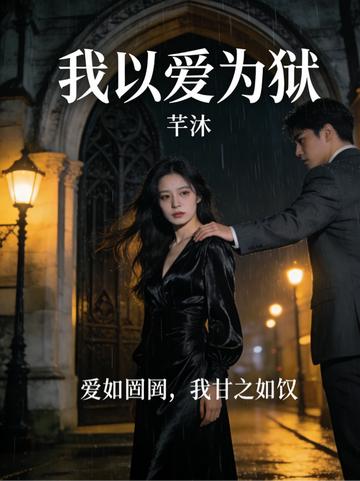
I Use Love as Prison
我以爱为狱
- Status
- Completed
- Length
- 201k Words
- Genre
- Modern Romance
- Subgenre
- Billionaire CEO
- Audience
- Female
- Updated
- 5mo ago
- Source
- Fanqie
Stats
2Reads
100Chapters
677Reads · all time
Tags
Synopsis
Reader comments
In booklists 3

Looking for High-Scoring and High-Quality Modern Romance Novels
911.6kViews192Books3dUpdated



Asking for Mutual Reviews of New Books
I want to read a book similar to "Six Paths of Martial Saint". Let's review each other's new books, Taoist friends, one person is five stars, there are a thousand, come on
868kViews329Books3hUpdated



If You Are Looking for a Story About a President with a Paranoid Male Protagonist, You Can Also Write It Without Any Brains.
43.6kViews63Books2moUpdated
The Origin of Pathological Personality and the Attraction of "Beautiful, Strong and Tragic" Characters Tracing the tragedy: The male protagonist's controlling nature and extreme behavior are often rooted in his tragic childhood experiences (such as abandonment, emotional neglect, etc.). The discussion should focus on: Is the trauma in the family of origin sufficient to explain criminal behavior in adulthood? How should we view this setting of "hateful people must be pitiful"? The allure and risk of "beautiful, strong and miserable": What makes this type of character so attractive? Is it because of its extreme affection, or the desire for salvation brought about by its sense of brokenness? While appreciating such characters, are we prone to blurring the boundaries between fiction and reality, thus subconsciously beautifying or excusing pathological behaviors in reality? Possibility of redemption: Does a character who has committed a serious crime (e. G., Imprisonment, deception) deserve redemption? How does the story's ending (such as HE or BE) affect the reader's final judgment of his actions?
After watching "I Use Love as Prison", the most shocking thing is never the extreme sadomasochistic pull, but the two-way, unknown torment hidden behind the four words "I Use Love as Prison". It does not write the story as a one-way one-man show for a paranoid boss, nor does it portray the heroine as a dodder flower who only consumes herself in love and hate. Qi Yuchen's "prison" was never the shackles that forcibly trapped Su Wan by his side, but first imprisoned himself for a thousand and ninety-five days and nights - he used his ruthlessness to go overseas and the reputation of betrayal and alienation to exchange enemies in the dark for not killing Su Wan. His paranoia was never unreasonable possession, but the cowardice and restraint that he could not afford to risk even half of his sweetheart's life. And Su Wan's image breaks out of the flat routine of many sadistic novels. She did not collapse in the disaster, gritting her teeth and fighting for a living in the quagmire, gathering strength to find the truth; her hatred of Qi Yuchen for "leaving without saying goodbye" was true, but hidden under her hatred, the newspaper photos she secretly cut out, the half safety buckle she had worn for three years, and the unspoken concerns in countless late nights were also true. Three years of duplicity is not the self-pulling of the love brain, but fifteen years of love engraved in the bones and blood, which cannot be completely erased by a sudden disaster. Many novels of the same type are easy to misunderstand for the sake of abuse, but the separation and estrangement in this book is an almost insoluble dilemma: if Qi Yuchen shows even the slightest concern about Su Wan, the knife hidden in the dark will fall immediately, and he can only use the most hurtful way to do the most protective thing for her. This feeling of powerlessness makes all the pulling have a solid landing point, instead of just moaning for no reason. Of course, it does not completely break out of the urban sadomasochism framework, and some of the plots also have traces of strong settings, but the victory is that the emotions are sincere enough. It never beautifies "love" into an excuse for bondage and imprisonment. In the end, you will find that the so-called "love as prison" is never one party's imprisonment of the other. It is two scarred people who, after crossing the blood feud and three years, are willing to hand the rest of their lives into each other's hands to serve as a destination and salvation for each other. A very good book, but a bit short~
This book breaks away from the flat formula of traditional sadistic novels and depicts the two-way torment of love as a prison in a heart-wrenching manner. The male protagonist's paranoia is not unreasonable possessiveness, but a protection that hides timidity and restraint; the female protagonist is definitely not a dodder flower. Underneath the love and hate, there is deep affection engraved in the bones and blood. The writing style is delicate and poignant, making this duplicitous love particularly touching. It is a masterpiece of sadomasochism that is worth savoring [Like][Like]
Not bad, quite interesting
From the gentle shackles to kneeling down to beg for mercy, the paranoid and affectionate destruction and redemption are written vividly and vividly, which is both sadistic and addictive.