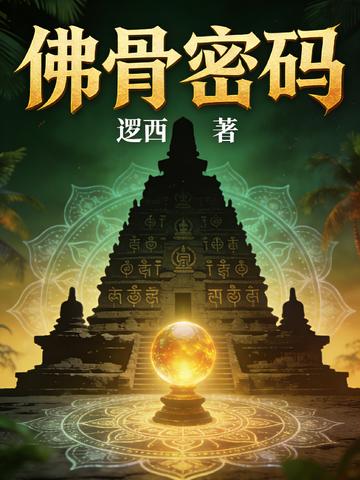
While cataloguing ancient texts at the Vietnam Institute of Han-Nom Studies, Lin Weizhong, a professor at the National University of Singapore, discovers a deerskin insert in a sixteenth-century manuscript of Strange Tales of Lingnan. It bears esoteric symbols and a line written in Pali, Sanskrit, and Old Cham: “The Buddha is not far from man; man turns away from the Buddha. The five hundred arhats neither perish nor are born.” Almost simultaneously, a cache of “proliferating relics” is unearthed in Dragon Palace Cave in Chumphon Province, Thailand. Said to be the remains of five hundred monks who crossed the sea two thousand years ago, they are found to contain artificially modified strontium isotopes and continue to grow. Invited to investigate, Lin Weizhong discovers that the cave murals perfectly match the deerskin map, pointing to the Malayu Kingdom, erased from history.
Soon, he finds himself followed and bugged, while “The Reef,” a Malaysian antiquities-smuggling ring, emerges from the shadows. Its leader, “the Collector,” is paying a fortune for artifacts connected to the esoteric principal deity Amoghapasha. Lin Weizhong deciphers the map and uncovers the truth: in the thirteenth century, King Kertanegara of Singhasari hid a collection of esoteric relics and a consciousness-transference ritual beneath Borobudur, and the relics of the five hundred arhats are the key to unlocking it. With his student Lin Xiaodie, Thai photographer Basong, and Cambodian monk Naren, he follows the deerskin’s directions from the rainforests of Chumphon to Borobudur, from Angkor Thom to Myanmar’s Shan Plateau, gradually exposing a shocking secret: the proliferating relics may be biological chips that store “consciousness,” while Borobudur is a spiritual device that has been operating for a thousand years. The Collector’s true aim is to use the ritual to transfer his consciousness into the relic matrix and achieve a different kind of immortality.