[Traditional Fantasy] + [Ice Spirit Root] + [Sword Cultivation]
In this world where all paths arise together and magical powers abound,
Qi practitioners eat rosy clouds and drink dew, martial arts train their bodies and lead to spiritual enlightenment.
Shinto worships and casts souls, while demon cultivators are treacherous and unpredictable.
Demons cultivate and transform into spirits, ghosts gather in the underworld and travel in the underworld.
Sword cultivator can break through all kinds of magic with one sword, and each one follows his own path, showing his wonders.
Like sword cultivators, they do not practice all methods, but only focus on one sword, pursuing the ultimate state of "breaking all methods with one sword".
Martial arts, tempering the physical body, Qi and blood, developing the secret realm of the human body, or practicing the true meaning of martial arts, etc.
But the bloody battle between humans and monsters has lasted for thousands of years,
All paths of cultivation have different paths, but the desire to control demons and defend the world leads to the same goal through different paths.
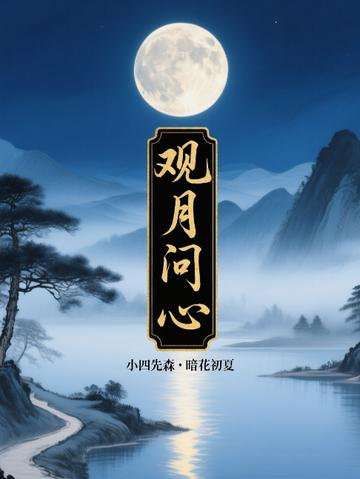
When the cold moon soaks into the cold river and illuminates the sparkling waves of the heart, it is the beginning of asking questions about the heart.
Reader comments
I welcome all book friends to comment and give me some suggestions. If there is anything inappropriate, I will improve it. Thank you all book friends. Thank you
This is a traditional fantasy and immortality novel with great potential, a mysterious and yellow world where "all paths coexist and magical powers abound". The highlight is that the "rational cultivation of immortality" setting breaks the traditional hot-blooded upgrade routine. It does not rely on adventure and epiphany, but relies on information collection, risk assessment and hard work to accumulate strength, which is refreshing.
The worldview has a solid structure, and it gradually unfolds from the small layout of Nanhai Town to the grand narrative of the Qingyun Sword Sect and the battle between humans and monsters, with clear layers. The author is particularly attentive to the setting up of the cultivation system. The self-creation process of "Guan Yue Jue" and the polishing details of the sword and body cultivation all reflect the serious thinking of "cultivation" itself, rather than a simple pile of numerical values. The blood and fire of guarding the border and the uncertainty of life and death of fellow sect members give the work a melancholy sense of reality.
The shortcomings are that the pace is slow, some descriptions of daily practice are slightly repetitive, and the emotional line is almost blank. But overall, this is a work that can be read with patience and is suitable for readers who are tired of routines and pursue a "sense of monasticism." I look forward to seeing the collision between Wu Bai's rational Taoist heart and the greater cause and effect in the world of cultivation in the subsequent chapters after the foundation is established.
I welcome all book friends to comment and give me some suggestions. If there is anything inappropriate, I will improve it. Thank you all book friends. Thank you This is a traditional fantasy and immortality novel with great potential, a mysterious and yellow world where "all paths coexist and magical powers abound". The highlight is that the "rational cultivation of immortality" setting breaks the traditional hot-blooded upgrade routine. It does not rely on adventure and epiphany, but relies on information collection, risk assessment and hard work to accumulate strength, which is refreshing. The worldview has a solid structure, and it gradually unfolds from the small layout of Nanhai Town to the grand narrative of the Qingyun Sword Sect and the battle between humans and monsters, with clear layers. The author is particularly attentive to the setting up of the cultivation system. The self-creation process of "Guan Yue Jue" and the polishing details of the sword and body cultivation all reflect the serious thinking of "cultivation" itself, rather than a simple pile of numerical values. The blood and fire of guarding the border and the uncertainty of life and death of fellow sect members give the work a melancholy sense of reality. The shortcomings are that the pace is slow, some descriptions of daily practice are slightly repetitive, and the emotional line is almost blank. But overall, this is a work that can be read with patience and is suitable for readers who are tired of routines and pursue a "sense of monasticism." I look forward to seeing the collision between Wu Bai's rational Taoist heart and the greater cause and effect in the world of cultivation in the subsequent chapters after the foundation is established.
Not bad, very pretty
Not bad, you can take a look
It's okay, but it looks a bit mechanical.