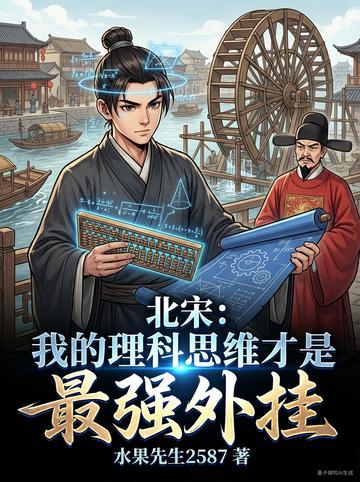
Shen Yanzhi, Peking University’s top science student, unexpectedly transmigrates into the body of a poor scholar in the third year of the Qingli era under Emperor Renzong of the Northern Song (1043). He has no transmigrator perks, no System prompts, and no cheat code of stored memories. He is unarmed, knows nothing about farming or etiquette, and can barely hold a calligraphy brush. All he has are the logical instincts, mathematical intuition, and empirical thinking forged by twelve years of modern science education. He cannot turn stone into gold, but he can calculate errors in the calendar. He cannot summon divine weapons, but he can improve the structure of the curved-plow. He knows nothing of officialdom’s coded language, yet uses statistical thinking to expose flaws in clerks’ account books. In an era when the civil examinations still prized poetry, Neo-Confucianism had yet to flourish, and technology was dismissed as “ingenious but useless,” he wields reason as his blade, patience as its sheath, and time as his fuel. In a corner no one notices, he rebuilds the foundations of knowledge, brick by brick: from a destitute student renting a room in southern Bianjing to copy scriptures, to a staff official in the Bureau of Ever-Normal Granaries overseeing river surveys, and finally to quietly shifting the intellectual climate among scholars with his Notes on the Investigation of Things, achieving a silent and irreversible leap in understanding.