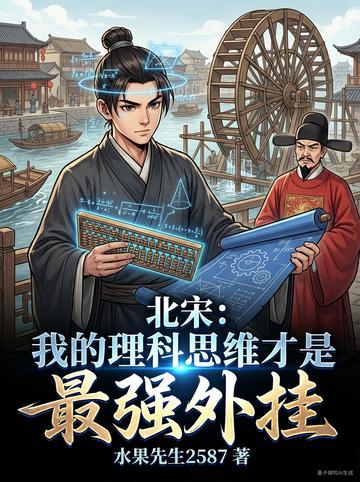
Shen Yan, the top science scholar at Peking University, accidentally traveled to the third year of Qingli reign of Emperor Renzong of the Northern Song Dynasty (1043) - a humble scholar with no traveler benefits, no system prompts, and no memory plug-ins. He was unarmed, ignorant of farming, ignorant of etiquette, and could not even hold a brush firmly. The only thing he possessed was the logical instinct, mathematical intuition and empirical thinking developed by twelve years of modern science training. He can't turn stone into gold, but he can deduce calendar errors; he can't summon magic weapons, but he can improve the structure of curved shafts and plows; he doesn't know the secrets of officialdom, but he uses statistical thinking to uncover loopholes in subordinate staff's account books. In an era when poetry and prose were emphasized in the imperial examinations, Neo-Confucianism was not yet emerging, and technology was dismissed as "strange skills and tricks", he used rationality as a blade, forbearance as a sheath, and time as wages to reconstruct the cognitive coordinates brick by brick in unseen corners - from a down-and-out boy who rented a house in the southern city of Bianjing to copy scriptures, to a promotion official in Changping who presided over river engineering surveying and mapping. Finally, with "Notes on Investigation of Things", he quietly stirred up the scholarly thoughts and completed a silent and irreversible cognitive upgrade.