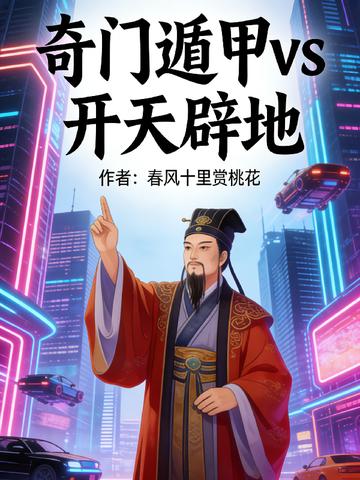
"Qi Men Dun Jia VS Creation of the World" is a traditional chapter novel that combines metaphysics and secrets, chivalry and family, country and world. It uses the ancient art of "Qi Men Dun Jia" that has been lost for thousands of years as the core to unfold a treacherous river and lake legend. The whole book is divided into chapters, and the plots are intertwined with each other. It has the structure of a classical novel and the tension of fantasy and suspense, making it a gripping read.
The story begins in troubled times. A secret volume called "Qi Men Dun Jia", which records the Nine Palaces and Eight Diagrams, the Three Miracles and Six Etiquettes, and the Eight Gates and Nine Stars, appears, attracting sects and court forces to compete for it. A young scholar accidentally got involved in a dispute and was taught the true meaning of Dunjia by a hidden master. He grew from an ignorant scholar to a successor of the secret technique of controlling space-time formations. He uses strange formations to break the situation, uses eight mysteries to distinguish bad luck, and takes risks step by step amid grievances, secret battles, and border wars.
The novel integrates Qimen Dunjia's secret skills such as starting the game, arranging arrangements, and deciding events into the plot, setting up mazes, breaking murderous situations, solving strange injustices, and settling the world. The confrontation between good and evil, the entanglement of love and hate, the fight for secret treasures, and the deduction of secrets are intertwined and parallel. It not only has the thrilling showdown between masters, but also the fateful feeling of unpredictable secrets.
The whole book takes chivalry as its bones, metaphysics as its soul, and writes about the human mind and world through the method of Dunjia. Each chapter is filled with suspense, and the story progresses step by step to reveal the shocking conspiracy behind the secret scroll. In the end, the protagonist uses magic to help people and protects the heart with Tao, creating an immortal legend of Qimen Jianghu, which fully demonstrates the mystery and breadth of traditional Chinese magic culture.
Reader comments
Comments on "Qi Men Dun Jia Fengyun Lu"
This is an excellent work that perfectly interweaves metaphysical wisdom with historical scrolls. "Qi Men Dun Jia Fengyun Lu" uses "the art of emperors" as a clue to connect the long history from ancient times to the Ming and Qing Dynasties. The author is well versed in the essence of Zhang Hui style. The seven-character dialogue Hui Mu is concise and vivid. The writing style of half text and half white is both elegant and popular. The opening and suspenseful ending of "Poetry" show a classical charm.
The most wonderful thing about the novel is that it turns the strange terms and Feng Shui principles into the flesh and blood of the plot - the "eight gates and nine stars" hide mysteries, and the "dragon energy exchange" promotes the plot without being stiff and preachy. The portraits of the descendants of Qimen in the past dynasties are vivid, interpreting morality and power in the historical changes, making boring metaphysical knowledge vivid and perceptible. The richness of history and the mystery of metaphysics create a unique spark, which not only satisfies the desire for exploration of traditional culture lovers, but also attracts ordinary readers with a compact plot. It can be called an ingenious work that is both informative and readable.
Super pretty! This is an auxiliary introductory book for learning "Qi Men Dun Jia Shu". In the form of a chapter novel, simple and easy-to-understand language, and legendary writing style, it guides beginners to understand the historical evolution of "Qi Men Dun Jia Shu" and enhances their interest in learning "Qi Men Dun Jia Shu"!
Comments on "Qi Men Dun Jia Fengyun Lu" This is an excellent work that perfectly interweaves metaphysical wisdom with historical scrolls. "Qi Men Dun Jia Fengyun Lu" uses "the art of emperors" as a clue to connect the long history from ancient times to the Ming and Qing Dynasties. The author is well versed in the essence of Zhang Hui style. The seven-character dialogue Hui Mu is concise and vivid. The writing style of half text and half white is both elegant and popular. The opening and suspenseful ending of "Poetry" show a classical charm. The most wonderful thing about the novel is that it turns the strange terms and Feng Shui principles into the flesh and blood of the plot - the "eight gates and nine stars" hide mysteries, and the "dragon energy exchange" promotes the plot without being stiff and preachy. The portraits of the descendants of Qimen in the past dynasties are vivid, interpreting morality and power in the historical changes, making boring metaphysical knowledge vivid and perceptible. The richness of history and the mystery of metaphysics create a unique spark, which not only satisfies the desire for exploration of traditional culture lovers, but also attracts ordinary readers with a compact plot. It can be called an ingenious work that is both informative and readable.
Super pretty! This is an auxiliary introductory book for learning "Qi Men Dun Jia Shu". In the form of a chapter novel, simple and easy-to-understand language, and legendary writing style, it guides beginners to understand the historical evolution of "Qi Men Dun Jia Shu" and enhances their interest in learning "Qi Men Dun Jia Shu"!