Stats
53Reads
77Chapters
2Listens
4.3kReads · all time
Tags
Synopsis
Reader comments
In booklists 4

I Beg for a Book That Time Travels to Doraemon
55
4.7MViews109Books3dUpdated

Are There Any Doraemon Fans Who Don't Hate Nobita?
A daily funny comic, all about Nobita Nobita, ↑ Shizuka's
677.3kViews50Books14dUpdated
A Fanfic About Doraemon
649.1kViews56Books2dUpdated


About Doraemon.
47.8kViews32Books4moUpdated
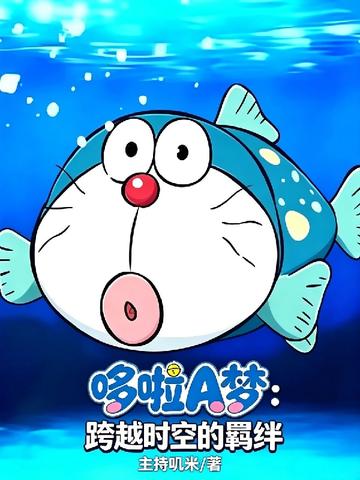
The charm of fan creation is that it can bloom unexpected flowers in familiar soil. "Doraemon: Bonds Across Time and Space" is such a surprising work - it cleverly blends the childlike world of "Doraemon" with science fiction narratives to weave a moving story about memory, bonds and redemption. The core idea of the novel is eye-catching: Lang Guang, a newcomer to the 24th century space-time patrol, receives a special mission - to go back in time, lurk beside Nobi Nobita, and guide this seemingly ordinary boy to save a parallel world that is on the verge of destruction. The setting itself is full of tension: a boy from the future wants to witness how a boy who is still ordinary "now" becomes the key to changing the world. What's even more clever is that the author laid a hidden clue - Lang Guang's lost memory, and his inexplicable familiarity with Sophia, implying that this mission is far from being as simple as it appears. The characterization is the most outstanding aspect of this novel. Lang Guang is not the kind of perfect hero. He has the vigor of a young man, but he is also awakened by nightmares in the middle of the night. He is calm and decisive when performing tasks, but he is at a loss when facing Sophia. The author uses delicate brushstrokes to describe his inner world - those nights entangled in nightmares, the soft calls for help in empty rooms, and the clumsy but warm companionship of robots, making this boy from the future vivid and real. Especially his interaction with professional robots. Those cold machines use the most precise programs to offer the warmest care. This contrast touches people's hearts more than any sensationalism. Sophia's image is equally impressive. As a mermaid princess, she has the nobility and elegance of a noble, but also the curiosity and innocence of a girl. Her wonder at airplanes, her unfamiliarity with traffic lights, her lonely eyes under the stars, every detail silently tells the story of her identity as a "foreigner". But Sophia is not a passive princess. She will risk her own life to save the comatose Wolf Guang, and will venture to land to see the stars in her hometown. The pair of legs that turn into fish tails in critical moments are not only a metaphor for her identity, but also symbolize her situation of wandering between two worlds. As for the handling of the original characters of "Doraemon", the author showed sufficient respect and understanding. Nobita is still the clumsy but kind boy who will be punished to stand, will envy Xiaofu's vacation, but will also be the first to think of a solution when Sophia needs help; Fat Tiger is rough but generous, Xiaofu loves to show off but never loses control at critical moments, Shizuka is gentle and considerate, and Doraemon will always be the blue robot cat who protects everyone's dreams with a treasure bag. The author did not weaken the original characters in order to highlight them, but instead allowed them to show richer levels in their interactions with the new characters - such as Fat Tiger's initiative to "educate" the impolite husband, and everyone's reaction when Nobita drew a scrawled mermaid picture, all retaining the charm of the original work. The narrative rhythm of the novel is relaxed and relaxed. From the shocking opening of the doomsday, to daily campus life, to the fantasy adventure after meeting Sophia, each chapter advances the main plot while also containing heartwarming daily moments. What is particularly worth mentioning is the absurd scene where a drunken Shinsuke says "I saw a shark" into the air while sardines and puffer fish swim around him. It not only has the sense of humor of the original work, but also cleverly connects the two story lines. And the subtle emotions between Lang Guang and Sophia, from the inexplicable tears when they "first met", to the embarrassment behind the bathroom door, to the holding hands under the starry sky, every step is written with restraint and touching, without falling into the clichés of romance. In terms of thematic expression, the novel touches on the dialectical relationship between memory and identity, fetters and mission. Lang Guang's erased memory is precisely his most cherished bond; he was ordered to "guide" Nobita, but was infected by Nobita's simplicity and kindness in the process; Sophia looked for the stars in her hometown, and finally found a home in the company of strangers. These themes are intertwined, making the story go beyond the simple "good triumphs over evil" model and have a deeper dimension of thinking. Of course, there are also areas where the novel can be improved. The transitions in some chapters are a bit hasty, such as the arrival of the monster fish fleet and the daily switching on the earth are not natural enough; some key plots can be more fully prepared, such as the "past and present" bond between Lang Guang and Sophia, which is currently only at the hint level; individual dialogues are slightly lengthy and can be more refined. But as a serialized fan work, these problems cannot be concealed. What moved me the most was the understanding of "bonds" in the novel. Whether it's the sense of familiarity between Lang Guang and Sophia across reincarnations, or the warmth of Nobita and his team's unreserved acceptance of strange visitors, or even the clumsiness of the robots' programming to express concern, they all tell the same truth: what really matters is not the distance in time and space, or the difference in identity, but the willingness to stay for each other. When Lang Guang said to Sophia under the starry sky, "I will help you to the end, this is the first promise I made to you." When Nobita was rarely "smart" for Sophia, when Fat Tiger chased Xiaofu and insisted on finding the star, we saw not only the growth of the character, but also the power of the bond itself. This is a warm work. It is both a tribute to a classic and a courageous re-creation. Telling unfamiliar stories in a familiar world and letting new characters stand side by side with old friends requires the creator's deep understanding of the original work and the sincerity of telling the story well. I look forward to the subsequent development, to the day when Lang Guang regains his memory, and to the day when this group of children from different time and space can work together to protect everything they cherish together. After all, as the novel suggests - some bonds can transcend time and space and transcend reincarnation.
Nice [like] author, do you have many female protagonists? How many people? Can you write all the theatrical versions? If not, there are some movies from previous years such as Nobita's New Dinosaur (Green and Pink Dragons), Little War in the Universe, Utopia in the Sky, Symphony of the Earth, and The Story of the World. Among them, I recently watched the theatrical version of Symphony of the Earth. When the plot of this book reaches Symphony of the Earth, is it possible to arrange a reunion for Mitya's family? (There is Mijia's sister)
It's one of the better Doraemon fanfics I've read. I hope the author can finish it. After all, this genre is so unpopular that it's understandable if you can't stick with it. By the way, I want to ask when I wrote Undersea Ghost Rock City and Iron Man Corps. These two movies left a deep impact on me. The protagonist group was suppressed from beginning to end. If it weren't for the deus ex machina, they basically wouldn't be able to win.
You have to give yourself a 5 points, okay [laughing evilly] I did some self-criticism and wrote, and suddenly I found that I seemed to be getting more and more out of touch, and I found that I seemed to be getting further and further away from my childlike innocence. At this time, I would listen to Doraemon's theme song to find the feeling of childhood. Doraemon... I really like it. I have seen the big one since I was a child. So when I made a choice between multiple female protagonists and single female protagonists, there was a conflict in the comment area. I am very sorry for this, because I am no longer the childhood me, but the childishness My heart is still pulling me. At first I wrote this novel because I liked Sophia, but then I was slowly attracted by my childhood self. Yes, Doraemon is a work that brings happiness and positivity to children, Mr. Fujiko He is really handsome. He can always maintain a childlike innocence and bring happiness to children. I think it is quite difficult to capture that feeling. It is like numbly coding. Of course, I have many ideas, but they are a bit too unconstrained, hahaha... Here, I am very grateful to Mr. Fujiko for bringing Doraemon to my childhood. Thank you.