Introduction to the work "Jinling Life and Death"
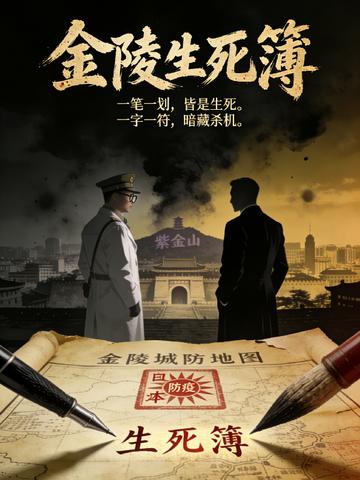
"Jinling Life and Death" is a hard-core espionage novel set in the occupied areas of Central China from 1940 to 1942. It focuses on the germ warfare conspiracy of the Japanese invaders Rongzi 1644 Unit and writes about the persistence of the country and the life and death game in the Dark War era.
In the spring of 1940, Chen Mo, a CCP agent code-named "Medicine King", sneaked into Nanjing under the cover of traditional Chinese medicine and was ordered to form a "Stinger" team to investigate the truth about the bacterial weapons of the Japanese Army's "Epidemic Prevention and Water Supply Department" and avenge the tragic death of his brother in Unit 731. He fought side by side with his fiancée, Suning, codenamed "White Yuan", and teamed up with Japanese party member Takeshi Ishikawa and quarry agent Zhao Tiezhu to deal with the city of Nanjing, surrounded by tigers and wolves.
The novel unfolds the plot with high-energy plots such as secret orders to infiltrate, lurking in the hospital, piano transmission, and rainy night camp visits. Chen Mo relies on his medical skills and resourcefulness to deal with the Wang puppet spy, Japan's special high school, and military forces, and gradually uncovers the shocking conspiracy of Unit 1644 to cultivate deadly bacteria such as plague, cholera, and anthrax, and prepare for the "Sakura Project" to implement airdrops. Military agent Shen Xiaotian led the "Breaking Miasma" action team, and the "Stinger" team went from being wary of each other to secretly joining forces to fight the Japanese bacterial warfare conspiracy on two fronts.
From the secret battle in Nanjing City, to the thrilling destruction of the bacterial base in Wuxi, to the anti-epidemic battle in Chongshan Village in eastern Zhejiang, Chen Mo and others used silver needles as blades, prescriptions as shields, and intelligence as spears. In the deadly trap of the Japanese army's "Operation Autumn Frost", they protected their compatriots with their flesh and blood, used their lives to collect ironclad evidence of bacterial warfare, and exposed the crimes of the Japanese army to the world.
The work combines the tense suspense and history of spy wars
Lots of rainbows