When I was seven years old, I discovered that the entire town had been "planted" on my family's ancestral grave.
I could see the chrysanthemums blooming above their heads - the teahouse owner had golden petals, the miner had gray petals, and my father had an iron chain extending from the ancestral hall running through his neck. Before he died, my grandfather gave me his "Third Eye" so that I could see clearly the truth behind the centuries-old fragrance of chrysanthemums: that fragrance was watered by the bones at the bottom of the well and fed by the vitality of living people. On the night of my twelfth birthday, I walked towards Kikuta holding a torch. Either burn this man-eating garden, or become the next sacrifice to be "grafted".
Reader comments
"The Fragrance of Chrysanthemums" is a coming-of-age epic that combines cruel poetry and historical torture.
Seven-year-old Zhou Jusheng smelled the fishy-sweet aroma for the first time at his grandfather's funeral. Five years later, when her "Third Eye" opened after she had a high fever, she saw the truth - chrysanthemums symbolizing slavery were blooming on the heads of everyone in the town, and their roots were plunged into century-old blood wells. The "Chrysanthemum Immortal" worshiped by the Zhou family for generations is actually a cannibal system cultivated by the souls of the victims of the family's extermination during the Guangxu period. The chrysanthemum incense is an anesthetic made from mercury poison, resentment and the vitality of living people.
From the golden chrysanthemums in the ancestral hall to the soul-retaining urn in the teahouse, from the secret account in the attic to the blood letter at the bottom of the abandoned well, twelve-year-old Zhou Jusheng held evidence and beat the ancestral drum of liquidation in front of the ancestral hall. When the clansmen saw the souls of centuries-old grievances rise in the flames, when the chrysanthemum fields turned into scorched earth, a man-eating garden named "incense" finally collapsed.
But this is not a revenge story. The wild chrysanthemums growing on the scorched earth carry a slightly bitter real flavor; in the backpack of a long journey, the blood book and the wild chrysanthemums are juxtaposed - the former is a sin that cannot be forgotten, and the latter is a new possibility growing on the ruins.
"The Fragrance of Chrysanthemums" constructs a fable about memory, guilt and rebirth with astonishing literary density. It not only tells the story of a girl's courage to fight against a century-old crime, but also asks: When the entire meaning system on which survival is proven to be based on blood, how can people learn to breathe again in the ruins?
[Laughs]
Super recommended
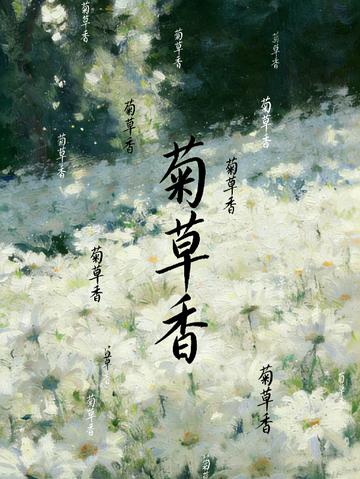
"The Fragrance of Chrysanthemums" is a coming-of-age epic that combines cruel poetry and historical torture. Seven-year-old Zhou Jusheng smelled the fishy-sweet aroma for the first time at his grandfather's funeral. Five years later, when her "Third Eye" opened after she had a high fever, she saw the truth - chrysanthemums symbolizing slavery were blooming on the heads of everyone in the town, and their roots were plunged into century-old blood wells. The "Chrysanthemum Immortal" worshiped by the Zhou family for generations is actually a cannibal system cultivated by the souls of the victims of the family's extermination during the Guangxu period. The chrysanthemum incense is an anesthetic made from mercury poison, resentment and the vitality of living people. From the golden chrysanthemums in the ancestral hall to the soul-retaining urn in the teahouse, from the secret account in the attic to the blood letter at the bottom of the abandoned well, twelve-year-old Zhou Jusheng held evidence and beat the ancestral drum of liquidation in front of the ancestral hall. When the clansmen saw the souls of centuries-old grievances rise in the flames, when the chrysanthemum fields turned into scorched earth, a man-eating garden named "incense" finally collapsed. But this is not a revenge story. The wild chrysanthemums growing on the scorched earth carry a slightly bitter real flavor; in the backpack of a long journey, the blood book and the wild chrysanthemums are juxtaposed - the former is a sin that cannot be forgotten, and the latter is a new possibility growing on the ruins. "The Fragrance of Chrysanthemums" constructs a fable about memory, guilt and rebirth with astonishing literary density. It not only tells the story of a girl's courage to fight against a century-old crime, but also asks: When the entire meaning system on which survival is proven to be based on blood, how can people learn to breathe again in the ruins? [Laughs] Super recommended