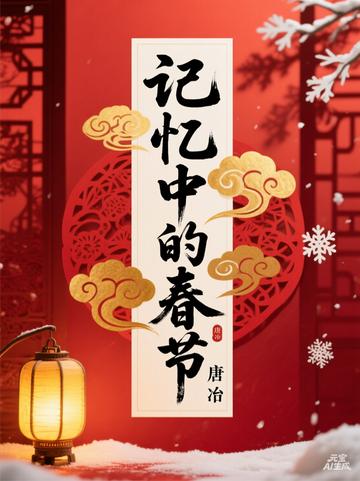
Content introduction:
A jade bean, through a hundred years, appears and disappears in the dumplings on New Year's Eve.
In 1924, it was wrapped in the sweetness of maltose, hidden in the expectation of the ten-year-old Wang Huachun to sacrifice the stove; in 1937, it was immersed in the copper coin dumplings in the basement of the enemy-occupied area, witnessing the survival of a family; in 1950, it felt the hotness of the "glory of labor" under the first Spring Festival couplets of New China; in 1967, at the New Year's Eve dinner of stewed meat in the coal stove, it silently resisted the cold wave of the times.
From the smoke on Qushuiting Street in the ancient city of Jinan, to the weightlessness of the planting cabin of the Mars base; from the premiere of the "Spring Festival Gala" in front of the black and white TV, to the endless echo of algorithms in the deep sea of data. The fate of the four generations of the Wang family unfolded, flowed and reunited at the New Year's Eve dinner table.
This is not only a story about "celebrating the New Year", but also about "greeting the New Year" - how in the midst of war, chaos, change and the journey across the stars and the sea, we still raise glasses, still sit around, and still remember to put a hard object into the dumplings, whether it is copper coins to pray for peace or jade beans that travel through time and space.
"New Year's Eve" is a century-long journey. Go for the temperature of a bowl of dumplings, go for the promise of a jade bean, go for the stubborn tenderness of saying "Happy New Year" no matter where you are or what generation your heart is in.