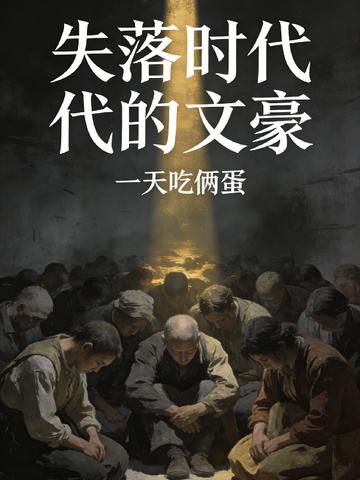
Li Shuwen, a 32-year-old attending physician in gastrointestinal surgery in his previous life, dies of overwork after rushing to save a patient during a night shift. He transmigrates to Blue Star, a parallel world much like Earth. Its people and things resemble those of his former life, but this world has only recently recovered from a great catastrophe. Its spiritual culture has been almost entirely severed. For the sake of humanity’s survival, everyone’s thinking has become completely uniform: everything must serve the advancement of science and technology. As a result, however, people’s inner lives are utterly impoverished. As technology advances, humanity escapes the pressure of mere survival, but the inertia of the past still constrains people’s minds. Now Li Shuwen has brought Earth’s civilization to this world, to save a lost age.
Li Shuwen stood up, his clear, powerful voice carrying through the entire conference room:
“The Great Ice Age ended a hundred and fifty years ago. With iron wills, our ancestors reclaimed the right to live from the ice and snow. The spiritual legacy they left us, discipline, dedication, and collectivism, is the foundation of our civilization. We must never abandon it.”
“But today, standing on the solid ground our ancestors built, we face new questions. When survival is no longer our only concern, and material life grows ever richer, where should we find a home for the human spirit? Must literature continue to be a ‘trumpet,’ or can it also become a ‘window,’ one that lets us see the beauty of life, the complexity of human nature, and the richness of the world?”
Maybe I have a bit of a savior mentality. Every time I see the protagonist's work saving others, I feel very happy (personally, I feel happy). The author writes very well. The protagonist is a very sincere character, and some of his thoughts or actions are very sincere. And the characters here are basically not facial expressions (emphasis!) Some characters really moved me and made me cry or smile for them. So far, I have seen the protagonist come back from France to attend a state banquet, and I feel quite warm. It is not the kind of banquet where he writes poems to cause outrage or there are people who are not clear-minded, but it is just an ordinary meal. Everyone encourages the protagonist and likes this heart-warming story. I just want to ask if the girl named Su is the CP of the protagonist, and whether the protagonist has no CP or has CP. I feel that it is more interesting for the protagonist to pursue a career. I don't really want to see the protagonist fall in love, but it feels like, well... It's the kind of child who wants to go to Tsinghua University and Peking University to drive an excavator with Huang Mao. I don't mean to discriminate against people who drive excavators (not a guide, just asking! Don't get me wrong!) I like this story, so I give the author five stars. That's it for now. I'll see if the author changes his style of writing later or the writing is no longer the type I like, and decide whether to change the rating.
First of all, let me express my evaluation. Advantages: This book creates an independent and special world, and at the same time writes about a literary inheritor who breaks the chain. It has an independent story and diverse personalities. Being conservative does not mean opposition. It has an independent personality and creates a flesh-and-blood person, of course in thought. The shortcoming is that the characters are single, not in thought, but in words and life. Except for the protagonist, the words and deeds of others are too one-sided and lack the vitality of daily life. For the protagonist, the character's behavior is single. The text is not just about the book. The experience behind it is equally important. It is lived by the people at the bottom, so you can add a travel-loving character to the protagonist, as well as other people's stories and book fans' thoughts, to describe a person's thoughts on reading. I have read several manuscript novels, and I was deeply impressed by Li Liwen's novel. The reason is that the rhythm is well grasped. The author can also learn from it. The rhythm must be controlled well. At this point, I present this book to the author, come on
It's okay, the plot is not very interesting, but after reading it, I suddenly became interested in modern poetry. The author has read a lot of modern poetry, and I can understand a lot of modern poetry while reading. Moreover, if you read it in the context of the plot, you can appreciate the beauty and emotion of the poem faster than reading the poem alone.
When the hot pot of words is steaming and the smoke is swirling, and you are mesmerized, the blue sea stirs up a gust of wind, gently dispersing the blur of the world. When the young traveler walks into the desert, the air is filled with hot sorrow. The distant oasis stretches out a hand, gently erasing the island of life.
It's quite good. At a time when the literary genre is becoming more and more degenerate into purely vulgar pretentious themes and is becoming more and more boring, writing like this is still somewhat interesting. In fact, the flow of writing should have such an atmosphere, where communication and collision, incomprehension and empathy all coexist.
It's okay. The background is quite interesting, but I don't really like the subsequent development. It's a bit too bland, but keep writing! 🤭
This is the first book I have written. I give it five stars.
This article is quite rare. The meaning of literature is to touch the soul. Although it is a copy, the occasional originality is not a childish inheritance. Come on, author.
The first part is really good and powerful. It is a sudden clarion call in an era of silent writing. I don't know what happened next, so I read it and commented.
Woc, what an awesome new book.