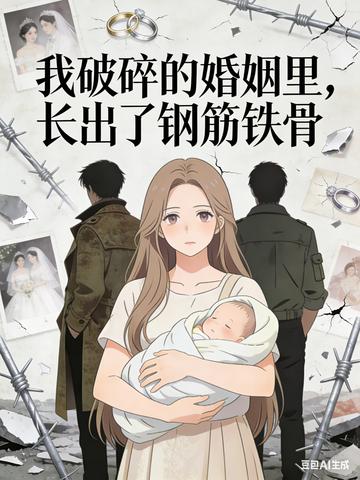
They said she was a "kefu" woman. At the age of twenty-three, her first husband died in a car accident after a quarrel, leaving behind a posthumous son. At the age of thirty-seven, her second husband suffered from liver cancer and passed away after a long period of torture.
Bai Lin's world completely collapsed when she was forty years old. Behind her are two young sons, in front of her are huge debts and rumors, and in her heart are bottomless self-doubts - is it really her fault that the people who love her leave one after another?
On the verge of despair, it was her mother and mother-in-law who supported her with their old hands. It was her eldest son who had suffered from depression who silently shouldered the responsibility of his elder brother. It was the younger son who told her with a childish hug: "Mom, I will protect you."
From the cold rental house in London to the cinnamon-filled dance studio in Wuhan; from holding a feverish baby late at night, to the hands clasped in front of the hospital bed; from the single mother running for a living to the dancers inheriting the intangible cultural heritage. Bai Lin spent forty years completing a thrilling journey.
This is not a cool article about "counterattack", but a true story of how a woman picked up her pieces from the chicken feathers, learned to protect herself from loss, and found strength in despair. When eighty-year-old Bai Lin sat looking back in the dusk, she finally understood:
Underneath the perfect specimen of life is all broken glory. The most solid destination for a woman is never marriage or children. It is when she still chooses to be her own light after being riddled with wounds.
Reader comments
The story is touching and down-to-earth, the characters are delicately described, and the storyline is attractive.
The story is touching and down-to-earth, the characters are delicately described, and the storyline is attractive.