After transmigrating to a parallel world where entertainment reigns supreme, Lin Yi finds a world with a missing chapter in its history.
No one knows the meaning of faith or sacrifice.
People care only about the thrill of killing a thousand enemies with one strike and the power bought with money.
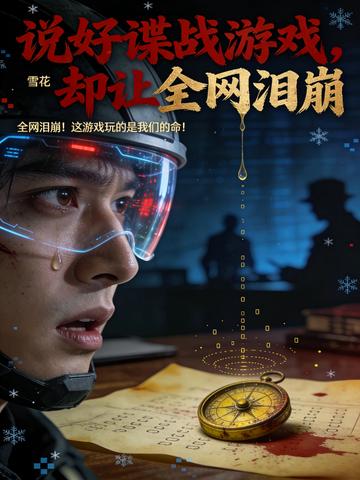
So Lin Yi makes a spy game called Infernal Affairs.
On launch day, the entire internet mocks its promotional trailer as “the year's tackiest, bar none.”
The red-haired Demon Lord Zhang Hao boldly declares that he will be the biggest villain of them all.
He enters the game and chooses the villain faction.
The System tells him: You are an undercover agent. Your code name is “Kite.”
He personally tortures his own comrade, the blacksmith.
As the blacksmith faces execution, he says, “Your comrade is the one killing you. Please don't blame him.”
Zhang Hao thinks it's all just a murder-mystery role-playing game.
Until his superior, Zhou Cheng, makes him swallow the bean-paste cake he detests and tells him, “Some things have to be swallowed if you want to survive.”
Until Old Eagle sacrifices himself after facing more than thirty enemies alone to protect his comrades, writing out intelligence in his own blood.
Until Nightingale dies in his arms while trying to deliver intelligence.
He breaks down in tears.
A million viewers cry with him.
One by one, they die in the game.
Outside the game, a ninety-year-old diary is opened.
The diary, from 1941, records the truth in clear detail:
“The young officer was named Zhang Hao. His code name was ‘Kite.’”
The game's story and the truth from ninety years ago fit together perfectly.
This damn thing isn't a game at all.
Watching more and more people be affected, Lin Yi says softly:
“Heroes shouldn't be forgotten.”
“Now, everyone has seen them.”
Lin Yi will reconnect the kite string that was severed in this era with his own hands.
Even if it means making an enemy of the whole world.



I have met many teachers. They taught me how to memorize texts, how to solve equations, and how to get high scores. No one ever taught me how to stand up straight. He taught several poor children how to read in the Guandi Temple for free and even made mung bean cakes. He told a child named Afu what "conscience" is. Conscience is when you lie in bed and sleep at night, you can close your eyes. He talked about "loyalty" to a rich young master named Lu Shaoqing, saying that true loyalty is not to others, but to one's own conscience. I've never seen anyone like this. The teachers in our school also teach us how to behave, but they teach us to be obedient, disciplined, and get high scores. Mr. Bookworm doesn't teach this. What he taught was why people should live standing.
If people praise him for his good deeds, he will be afraid; if he is told of his faults, he will be happy. (When others praise you, instead of being complacent, you become vigilant, lest you live up to your reputation or become complacent. When others criticize you, you feel happy because you get a chance to make corrections. ) We welcome and humbly accept comments from readers and friends.
Emotional changes and outbursts can be handled more delicately. If people who have been numb for too long can simply wake up, they won't be numb until now - after all, the setting is historical silence, not cultural fault.
Although it's not even yet... But I personally think it's really good-looking, very in line with my taste, and quite tear-jerking. The darkness needs someone to go in and erase their own light to illuminate it Big cheers for the author!
The emotional descriptions are very delicate, and I really like the protagonists created. When I saw the group portraits at the back, there were many angles of the characters. Anyway, I wasted a lot of tissues [I almost cried]