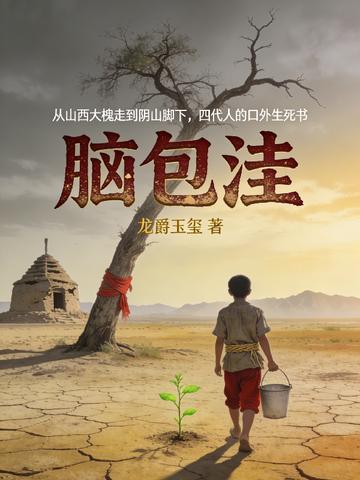
In the twenty-sixth year of Guangxu's reign, there was a severe drought in Shanxi. Sixteen-year-old Wang Dehou walked out of the big locust tree in Hongdong carrying half a chaff dumpling on his back. Forty days later, he buried the first oatmeal seed in the wasteland at the foot of Yinshan Mountain, and buried the lives of four generations of the Wang family.
From the great famine of the Republic of China to the land reform turmoil, from the iron plows of cooperatives to returning farmland to forests, the poorest "Naobao" outside the mouth witnessed every time the Wang family escaped death: some were blocked by the sandstorms of Obo, but were swept away by the times; some walked out of the grassland and became billionaires, but went back to plant a locust tree for their ancestors' graves.
A family epic full of "living", a microfilm of a century-old Chinese countryside - when the land grows green grass again, those Chinese-style roots that cannot die from hunger, defeat, or move are still sprouting in the wind and sand.
Open this book and see how the poorest and most humble people use their most stubborn roots to grind their sufferings into thin air and feed thousands of future generations.
Reader comments
I was very touched after reading it. The life stories of several generations are very exciting and touching.
I was very touched after reading it. The life stories of several generations are very exciting and touching.