In 2035, in the Asala Theater of War, the gates of the Um River controlled a nation's very breath: water, electricity, food, medicine, even “who gets to survive first.” All of it could be written into clauses, calculated in formulas, and turned into propaganda.
Zero Dam had briefly revived Asala, while also allowing the Haavk Group to enter the land under the guise of “legal cooperation.” When war swept through the region, the dam fell into the hands of the Asala Guard. Guard commander Sayed went from avenger to keeper of the dam. He had to restart it with as little gunfire as possible and bring the Um River back to life, while avoiding a complete break with Haavk: he couldn't hand over the gates, but couldn't afford to lose access to the technology; Haavk couldn't enter the dam, yet its influence was everywhere.
Meanwhile, another power was taking shape in Longbow Valley. Reis, born into a distinguished family, went from a disgraced officer to a warlord. The Mandel Bricks at the Diamond Queen Hotel, along with the keys and files from Haavk's radar station, gave him a taste for “bargaining chips.” The rift within the Guard began to widen: Sayed wanted order, while Reis wanted a price for victory.
As the fighting spread to Barkesh, Haavk's hidden experiments and shadowy resource network came to light. When conflict reached the Space City, satellites and the Sky Net, spires and falling debris, raised the war to a global scale. And all accounts would ultimately be settled at Tide Prison. Between the iron grip of order and the reckoning of revolt, everyone had to answer one question: did Asala need to be saved, or ruled?
From Zero Dam to Longbow Valley, from Barkesh to Space City, and on to Tide Prison, this is a chronicle of war spanning five theaters. Gunfire is only the surface. The real war is over who can hold the gates, control the narrative, and command the people's hearts.
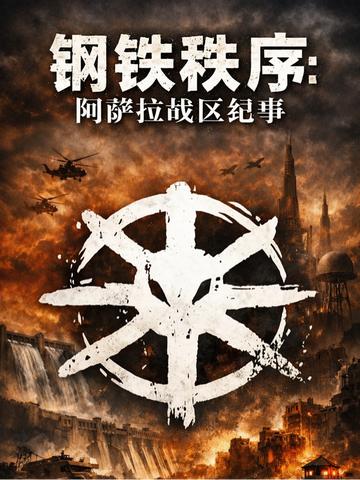









The huge and magnificent world view of the delta is under construction "Iron Order: Chronicle of the Assala War Zone" is like a cold knife that cuts not the flesh and blood of the battlefield, but the "order" itself. The most ruthless part is not the gunfire, but the negotiation table: the crown, contract and algorithm sit on the same table, and whoever holds the gate can decide whether the lights will turn on or not, and who will live first. The author does not rely on stacking up to describe battles, but relies on details - evacuation lines, secret codes, registers, and supply ledgers. He writes with great weight the process of building a team from scattered soldiers into an organization. The differences between Reis and Said are also very interesting to read: one learns war as a business, and the other regards business as a crime. Both are reasonable and dangerous to each other. After reading, you will find that this is not a simple "villains and heroes", but a history of war zones about how power parasitizes people's hearts and systems.