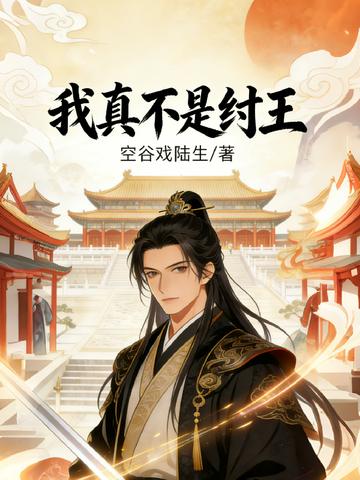
When he woke up, Zhou Zishou became the number one cannon fodder on the list of gods - Emperor Xin of Shang Zhou.
Facing the beginning of hell, he decided to use modern wisdom to save himself: he resolutely refrained from writing obscene poems, treated Su Hu's father and daughter kindly, and established a good relationship between the emperor and his ministers in advance... But why was sincere kneeling in front of the statue of Nuwa considered "frivolous behavior"? The sentence "The daughter of the Su family does not have to enter the palace" was misinterpreted as "the king is afraid of her bad luck"?
Bigan looked at him with more and more pain in his eyes. Hearing that Grand Master looked back at him, his knees felt weak. Suddenly there was a beautiful Daji in the harem who didn't look like a human being. What's even more frightening is that his attempts to improve agriculture, his grand plan to promote punctuation, and even his small wish to have a hot pot meal in the palace - how come they are all recorded in the ledger of "the atrocities of a foolish emperor"?
It wasn't until one day that he saw the sword light passing over Chaoge City with his own eyes, and heard the unified slogan behind Xiqi's "Feng Ming Qishan", that he suddenly realized: How could this God-conferring Battle look so much like a prehistoric drama in which the script had already been written and the "actors" of all parties were in place? And he, the "villain BOSS" who was supposed to complete the process according to the script, seemed to be the only variable.
Okay, since you say I am a foolish king - then I will use the most foolish way to accompany you to sing this drama to the end. I just overturned the table in the middle of singing, but don't blame me.
From a survivor who laughs and scolds, to a rebellious person who plays chess and breaks the game. When the fire of Lutai illuminated the sky, he faced the gods and Buddhas and raised his glass with a smile: "Here, take this glass to honor this man-eating destiny."