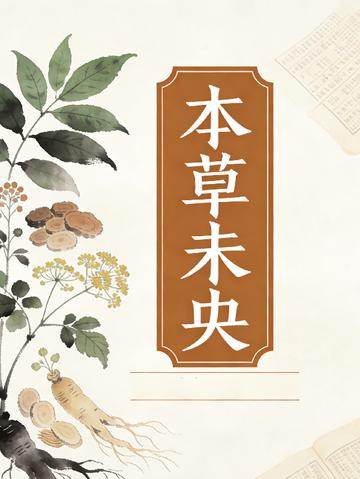
A county-level traditional Chinese medicine hospital with a history of 37 years and seven moves is now standing at a fork in the road of destiny.
In the autumn of 2018, two major challenges came at the same time: the review of secondary hospitals and the construction of new hospitals. The review needs to be passed, the materials need to be replenished, the faults need to be filled, and the new hospital needs to be built. And in the corner that no one is aware of, ordinary people have different views and even prejudices about hospitals and traditional Chinese medicine, conflicts between doctors and patients, complicated official rules and fortunes, and "most problems in the gray area" of grassroots power fields... Various storms are also quietly approaching.
This is not a heroic story. This is the story of how a group of ordinary people persisted, how they chose, how they left, and how they passed on something amidst the gaps in the system, the pressure of reality, and the changes of the times. About the life and death of a grassroots traditional Chinese medicine hospital, about the youth of a group of people, about the old trees that cannot be taken away, the herbs that cannot be left behind, the smell that cannot be forgotten, and the roots of doctors that are deeply rooted in the soil and try to break through the soil no matter what changes.
Underneath the faults, there is always something to stand on. Weiyang's ambition is endless.
This book uses a realistic writing style to delicately outline the survival picture of grassroots traditional Chinese medicine hospitals and the true fate of medical staff. It is a tribute to all ordinary people who persist in ordinary positions.
Reader comments
Above the fault, the root of the doctor
When I closed the last page of "A Materia Medica", it was an early summer afternoon outside the window. The sun was just right, but I felt as if I had just walked out of the corridor of an old hospital that was soaked in the bitterness of traditional Chinese medicine and the smell of disinfectant. The smell of herbs still seemed to be on my sleeves, and the dull hum of the blower in the decoction shop echoed in my ears. This is not a story about a hero's triumph, but a quiet and tenacious survival epic written for all the ordinary people who are trying to stand firm and pass on the fire in the cracks of the times and the faults of the system.
The novel focuses on a county-level traditional Chinese medicine hospital - a cornerstone that is often overlooked in the medical pyramid but carries the health trust of the vast majority of grassroots people. With the precision of a scalpel and the delicacy of an embroidery needle, the author dissects the messy but real ecology beneath the two seemingly glamorous propositions of "secondary hospital review" and "new hospital construction": a stretched nursing department, medical staff with questionable qualifications, herb bushes and old apricot trees that have no place in front of the modern blueprint. What the review team wants to see is the complete materials and up-to-standard data; what life itself wants to examine is the red eyes of people from all walks of life, the pending tomorrow, and the drifting apart.
Here, ideals and reality, inheritance and change, human relationships and regulations are like medicinal materials with different properties in the Chinese medicine cabinet, which are mixed into the same prescription called "survival" by the hand of fate. The taste is complex and the efficacy is uncertain.
The character maps in the book constitute an exquisite grassroots ukiyo-e. They are not symbols, but living entities with temperature and weight. Chen Mo's devotion to herbal medicine is the last guardian of a dying tradition; Xiao Manqing's rigor and exhaustion day after day are the cornerstone of maintaining the system from collapse; Wen Dongming's stomachache and family sarcasm during socializing in the wine shop illustrate the common dilemma of middle-aged people under the attack of career and family; while An Hui, Lu Kaicheng and old Chinese medicine practitioners represent the possibility of the difficult integration of old and new knowledge systems in specific soil. What is particularly touching is that the author does not endow them with extraordinary power or dramatic reversal. Their persistence is more often an almost instinctive "standing" - standing at the fault line of brain drain, standing under the weight of review pressure, and standing in front of the panic of contradiction between doctors and patients. This kind of "standing", because of its ordinaryness, demonstrates the most tenacious resilience of life.
The most precious quality of "Materia Medica" is its thoroughgoing realism. It does not avoid the embarrassment of grassroots hospitals and the bureaucratic system, nor does it glorify individual choices and outcomes. The fate of characters is often not determined by pure good or evil or ability, but is subject to the tilt of the establishment quota, problems left over from history, and even sudden waves of the times. The novel describes the rough edges and grayscale of life itself, sobriety and helplessness, which is a concentrated expression of this complexity. Let readers sigh with deep empathy and understanding.
"Weiyang" means unfinished or unfinished. This title is the soul footnote of the entire novel.
The old hospital buildings will eventually be replaced by new ones, the old apricot trees may not be transplanted, some people will leave with regrets, and some relationships will deteriorate due to the wear and tear of reality. However, what "Weiyang" has is the doctor's benevolence and professional ethics flowing in his blood.
The train of the times roars forward, always running over some things that are too late to take away, but there are always people who, in their own way, bury the most important "roots" and "souls" into new soil.
This is a novel that needs to be read calmly. It does not have ups and downs of plot spectacle, but only the daily torrent and the construction of details. But it is these seemingly trivial daily routines that constitute the most real and touching profiles of our times.
"A Materia Medica" is not only a novel about traditional Chinese medicine hospitals, but also a mirror that reflects every ordinary person who faces "faults" in their respective fields and strives to "stand up". It tells us that true inheritance and hope often lie not in grand narratives and triumphal trumpets, but in those seemingly insignificant but day-to-day persistence, in the depths of the cracks and the stubborn roots that are still trying to grow towards the light.
This may be the true meaning of "weiyang" in life.
Above the fault, the root of the doctor When I closed the last page of "A Materia Medica", it was an early summer afternoon outside the window. The sun was just right, but I felt as if I had just walked out of the corridor of an old hospital that was soaked in the bitterness of traditional Chinese medicine and the smell of disinfectant. The smell of herbs still seemed to be on my sleeves, and the dull hum of the blower in the decoction shop echoed in my ears. This is not a story about a hero's triumph, but a quiet and tenacious survival epic written for all the ordinary people who are trying to stand firm and pass on the fire in the cracks of the times and the faults of the system. The novel focuses on a county-level traditional Chinese medicine hospital - a cornerstone that is often overlooked in the medical pyramid but carries the health trust of the vast majority of grassroots people. With the precision of a scalpel and the delicacy of an embroidery needle, the author dissects the messy but real ecology beneath the two seemingly glamorous propositions of "secondary hospital review" and "new hospital construction": a stretched nursing department, medical staff with questionable qualifications, herb bushes and old apricot trees that have no place in front of the modern blueprint. What the review team wants to see is the complete materials and up-to-standard data; what life itself wants to examine is the red eyes of people from all walks of life, the pending tomorrow, and the drifting apart. Here, ideals and reality, inheritance and change, human relationships and regulations are like medicinal materials with different properties in the Chinese medicine cabinet, which are mixed into the same prescription called "survival" by the hand of fate. The taste is complex and the efficacy is uncertain. The character maps in the book constitute an exquisite grassroots ukiyo-e. They are not symbols, but living entities with temperature and weight. Chen Mo's devotion to herbal medicine is the last guardian of a dying tradition; Xiao Manqing's rigor and exhaustion day after day are the cornerstone of maintaining the system from collapse; Wen Dongming's stomachache and family sarcasm during socializing in the wine shop illustrate the common dilemma of middle-aged people under the attack of career and family; while An Hui, Lu Kaicheng and old Chinese medicine practitioners represent the possibility of the difficult integration of old and new knowledge systems in specific soil. What is particularly touching is that the author does not endow them with extraordinary power or dramatic reversal. Their persistence is more often an almost instinctive "standing" - standing at the fault line of brain drain, standing under the weight of review pressure, and standing in front of the panic of contradiction between doctors and patients. This kind of "standing", because of its ordinaryness, demonstrates the most tenacious resilience of life. The most precious quality of "Materia Medica" is its thoroughgoing realism. It does not avoid the embarrassment of grassroots hospitals and the bureaucratic system, nor does it glorify individual choices and outcomes. The fate of characters is often not determined by pure good or evil or ability, but is subject to the tilt of the establishment quota, problems left over from history, and even sudden waves of the times. The novel describes the rough edges and grayscale of life itself, sobriety and helplessness, which is a concentrated expression of this complexity. Let readers sigh with deep empathy and understanding. "Weiyang" means unfinished or unfinished. This title is the soul footnote of the entire novel. The old hospital buildings will eventually be replaced by new ones, the old apricot trees may not be transplanted, some people will leave with regrets, and some relationships will deteriorate due to the wear and tear of reality. However, what "Weiyang" has is the doctor's benevolence and professional ethics flowing in his blood. The train of the times roars forward, always running over some things that are too late to take away, but there are always people who, in their own way, bury the most important "roots" and "souls" into new soil. This is a novel that needs to be read calmly. It does not have ups and downs of plot spectacle, but only the daily torrent and the construction of details. But it is these seemingly trivial daily routines that constitute the most real and touching profiles of our times. "A Materia Medica" is not only a novel about traditional Chinese medicine hospitals, but also a mirror that reflects every ordinary person who faces "faults" in their respective fields and strives to "stand up". It tells us that true inheritance and hope often lie not in grand narratives and triumphal trumpets, but in those seemingly insignificant but day-to-day persistence, in the depths of the cracks and the stubborn roots that are still trying to grow towards the light. This may be the true meaning of "weiyang" in life.