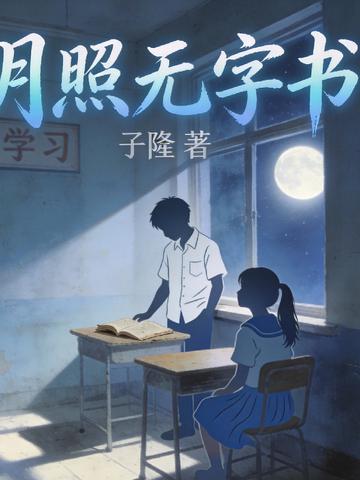
A letter lay sleeping in the dark for twenty-four years.
In the summer of 1999, on the night before graduating from elementary school, twelve-year-old Zhou Yu wrote a letter in neat calligraphy, one he would never send. He tucked it into a crack in the window frame of a teahouse on the old street, entrusting it to time along with all the innocent thoughts in his young heart.
In May 2023, photographer Lin Wei was preparing an exhibition in Beijing called "Messengers of Time," trying to capture the forms of emotions that had never been conveyed. On the final day before the exhibition, she received a letter that had traveled through time. On the yellowed rice paper, the boy had written: "Your smile made me feel that summer could be cool." At the end of the letter was a postscript from their elementary school teacher, Mr. Xu: "Years stretch long, and a young heart's feelings are precious. They deserve to see the light."
At this moment, thirty-year-old Lin Wei is using her camera to ask what shape memory takes.
At this moment, thirty-year-old Zhou Yu is renovating an old neighborhood in his hometown, restoring dignity to ordinary life beneath adjustable clothes-drying racks.
At this moment, thirty-year-old Li Wei is heading to Beijing with a picture of "singing stars" drawn by her daughter, Xiaoyu, and is about to reunite with an old classmate beneath the lights of the photography exhibition.
The letter's arrival did not unleash a storm. It was like moonlight that had finally reached its destination, quietly illuminating the riverbeds of three adults' lives: the paths carved by growing up, choices, silence, and watchful care.
This is not a story about "what if things had gone differently back then."
It is an exploration of "what do we do now?"
When a letter from the past reaches the present, it does not demand that history be rewritten