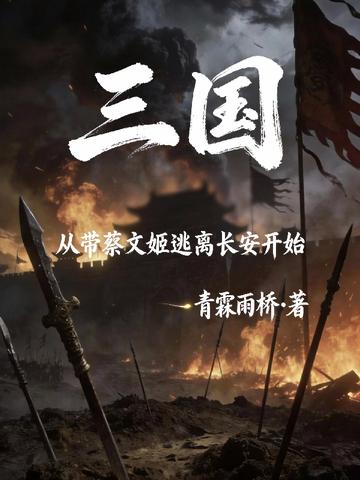
[The mixed faction has no system]+[The characters are taken from the Romance of the Three Kingdoms]+[Counselor Style]+[Some sweet things!!]+[Part of the timeline is based on the plot of the Romance]
This article is a collection of romances and historical materials. If the timeline is different, please do not take it seriously. It is just a butterfly effect.
--
I, Xiao Ye, named Zi Sheng, was born in the Xiao family in Lanling and studied under Cai Yong.
Logically speaking, my life ideal should be: drink tea, play the piano, and be a quiet and beautiful man in troubled times.
But God just doesn't let me get what I want.
Cai Yong insisted on talking about his ideals with me, and Lu Bu insisted on calling me his brother.
It's so hard for me.
In order to live a stable nine-to-five life in this troubled world, I decided to choose a lord and end this damn troubled world as soon as possible.
Reader comments
The protagonist is a very realistic person, who should only be suitable to go to Boss Cao's side, and most of the characters in it are very positive, without deliberately belittling or uplifting anyone, it is a very thoughtful novel.
The style of traditional historical writing is serious. Some parts are not pleasant to read, and some parts do not understand what the author wants to write.
Chen Gong's character was a bit broken. He left him because Cao Cao killed Lu Boshe's family. It was impossible for him to use Cao Cao as an example to persuade Lu Bu to kill Liu Bei. Even with his character, it was impossible for him to want to kill Liu Bei when Lu Bu was unjust and Liu Bei surrendered.
The protagonist plots against Liu Bei to surrender to Cao Cao, which makes people uncomfortable to watch. There are very few novels where the protagonist is written as a villain [facepalm].
As long as he is plotting against Liu Bei for self-reliance, I respect him as a character, but in the end, he is just trying to surrender. He is simply Qiao Zhou Zhou Zhou, a proper villain [anger]
It's too much to write about Liu Bei cannibalizing human flesh. Even Liu Bei's novels usually don't write like this. Positive historical figures should not be discredited.
After reading the book, I was quite touched by the protagonist's image, so I made this comment:
(1) Protagonist image
The protagonist of this book is very vivid and outstanding.
It is different from the protagonists who plot the world and achieve unparalleled achievements in the current Three Kingdoms novels. The protagonist of this book also strategizes and controls the overall situation, but his starting point is always his "home". Perhaps this is more in line with our modern perspective and contemporary thinking, so it is more approachable and more in line with our reading expectations (perhaps).
More importantly, the author does not simply rely on a forward-looking perspective to write. The author clearly states at the beginning that it can be predicted, but difficult to change. This is indeed done in the book, which undoubtedly makes the whole story more reasonable and original.
Furthermore, what attracts me most about this book is the temperament of the protagonist. In this book, a true image is created that is rare in online articles: he will repay kindness, but he will ruthlessly clear away everything that hinders him from maintaining his "home"; he (I feel) He has no ambitions and only wants to protect his family, but he is willing to travel to the battlefield to stir up the storm in Xuzhou and get involved with his own life; he mediates between Liu Bei, Lu Bu, and Tao Qian, and holds great power, but he is not motivated by power, only to prevent the storm from harming his own family.
All in all, the protagonist is a person who is wise and knowledgeable, but has no ambition. He is a very vivid character and is very good.
Get some personal goods
(2) Ambition, wisdom, and knowledge
Today, if we look at the world's talents, they must have three qualities: ambition, wisdom, and knowledge.
Aspirations are where people want to go and where their hearts are. Some may make great achievements and gallop around the world; some may happily settle down and stay in a corner; some may prepare for the final outcome and make strategic plans. Then ambition is the underlying standard for willingness and decision-making.
A wise man thinks about everything he thinks about. For example, when facing a battle, one may compare the gains and losses of a city or a pond, and fight for every advantage; or review the use of troops and tactics, and make changes according to the situation; or plan the dispatch of grain, grass, and logistics, and prepare before the battle; or even build up the overall situation and carry it in the palm of one's hand, defeating the enemy's troops without fighting. Since the levels are special, the superiors and inferiors must be judged. This is the level of people's thinking.
A person who knows what he has learned is what he has hidden in his body. If you are good at farming, you will have a solid warehouse; if you are good at writing, you will be able to carry out government orders; if you are good at eloquence, you will be able to maneuver; if you are skillful in making things, you will be able to use your tools well; if you are a good soldier, you will be able to fight and defend. All these are reserves for dealing with specific practical problems.
A person with weak ambitions is Liu Jingsheng, who is sitting in Jingxiang and armed with a hundred thousand armor, but has no ambition in all directions. He waits and defends himself, and is eventually swallowed by the Cao family. A weak-minded person, like a young horse, has extraordinary talents and is good at discussing military strategies. However, in the battle of the street pavilion, he violated the law of discipline, abandoned the water and the mountains, and made troubles with his actions, so he lost important territory. A person who knows the weak is Emperor Hui of the Jin Dynasty. When he heard that the people were starving to death, he asked, "Why not eat minced meat?" It is not that he is unkind, but he is actually ignorant of the sufferings of the people.
Therefore, it is said: Those with weak ambitions will be able to rely on lies and lies. A person with weak intelligence will be stuck in a corner even if he talks eloquently. Those who know the weak are confident, and they must know that their actions are inconsistent.
The mechanism is too clever, and the protagonist's manipulation of Cao Song will not make Cao Cao think that this kind of person is too crazy. It is impossible for Cao Cao to reuse such a person.
Not bad, good historical orientation
A pretty good novel
Undoubtedly fine chaff
There were a few glitches at first, but later on it was okay, four stars.
I finished reading it in one sitting, a rare masterpiece in the Three Kingdoms.
Nice! The author must keep writing!
I watched it continuously and it was okay.
Looks good, Rem woohoo
I, Sun Quan, have no one to check and balance.
The writing style is very good, very logical, and very, very beautiful. I hope the author will not stop updating. Don't stop updating. Don't stop updating.
The protagonist is a very realistic person, who should only be suitable to go to Boss Cao's side, and most of the characters in it are very positive, without deliberately belittling or uplifting anyone, it is a very thoughtful novel.
The style of traditional historical writing is serious. Some parts are not pleasant to read, and some parts do not understand what the author wants to write. Chen Gong's character was a bit broken. He left him because Cao Cao killed Lu Boshe's family. It was impossible for him to use Cao Cao as an example to persuade Lu Bu to kill Liu Bei. Even with his character, it was impossible for him to want to kill Liu Bei when Lu Bu was unjust and Liu Bei surrendered. The protagonist plots against Liu Bei to surrender to Cao Cao, which makes people uncomfortable to watch. There are very few novels where the protagonist is written as a villain [facepalm]. As long as he is plotting against Liu Bei for self-reliance, I respect him as a character, but in the end, he is just trying to surrender. He is simply Qiao Zhou Zhou Zhou, a proper villain [anger] It's too much to write about Liu Bei cannibalizing human flesh. Even Liu Bei's novels usually don't write like this. Positive historical figures should not be discredited.
After reading the book, I was quite touched by the protagonist's image, so I made this comment: (1) Protagonist image The protagonist of this book is very vivid and outstanding. It is different from the protagonists who plot the world and achieve unparalleled achievements in the current Three Kingdoms novels. The protagonist of this book also strategizes and controls the overall situation, but his starting point is always his "home". Perhaps this is more in line with our modern perspective and contemporary thinking, so it is more approachable and more in line with our reading expectations (perhaps). More importantly, the author does not simply rely on a forward-looking perspective to write. The author clearly states at the beginning that it can be predicted, but difficult to change. This is indeed done in the book, which undoubtedly makes the whole story more reasonable and original. Furthermore, what attracts me most about this book is the temperament of the protagonist. In this book, a true image is created that is rare in online articles: he will repay kindness, but he will ruthlessly clear away everything that hinders him from maintaining his "home"; he (I feel) He has no ambitions and only wants to protect his family, but he is willing to travel to the battlefield to stir up the storm in Xuzhou and get involved with his own life; he mediates between Liu Bei, Lu Bu, and Tao Qian, and holds great power, but he is not motivated by power, only to prevent the storm from harming his own family. All in all, the protagonist is a person who is wise and knowledgeable, but has no ambition. He is a very vivid character and is very good. Get some personal goods (2) Ambition, wisdom, and knowledge Today, if we look at the world's talents, they must have three qualities: ambition, wisdom, and knowledge. Aspirations are where people want to go and where their hearts are. Some may make great achievements and gallop around the world; some may happily settle down and stay in a corner; some may prepare for the final outcome and make strategic plans. Then ambition is the underlying standard for willingness and decision-making. A wise man thinks about everything he thinks about. For example, when facing a battle, one may compare the gains and losses of a city or a pond, and fight for every advantage; or review the use of troops and tactics, and make changes according to the situation; or plan the dispatch of grain, grass, and logistics, and prepare before the battle; or even build up the overall situation and carry it in the palm of one's hand, defeating the enemy's troops without fighting. Since the levels are special, the superiors and inferiors must be judged. This is the level of people's thinking. A person who knows what he has learned is what he has hidden in his body. If you are good at farming, you will have a solid warehouse; if you are good at writing, you will be able to carry out government orders; if you are good at eloquence, you will be able to maneuver; if you are skillful in making things, you will be able to use your tools well; if you are a good soldier, you will be able to fight and defend. All these are reserves for dealing with specific practical problems. A person with weak ambitions is Liu Jingsheng, who is sitting in Jingxiang and armed with a hundred thousand armor, but has no ambition in all directions. He waits and defends himself, and is eventually swallowed by the Cao family. A weak-minded person, like a young horse, has extraordinary talents and is good at discussing military strategies. However, in the battle of the street pavilion, he violated the law of discipline, abandoned the water and the mountains, and made troubles with his actions, so he lost important territory. A person who knows the weak is Emperor Hui of the Jin Dynasty. When he heard that the people were starving to death, he asked, "Why not eat minced meat?" It is not that he is unkind, but he is actually ignorant of the sufferings of the people. Therefore, it is said: Those with weak ambitions will be able to rely on lies and lies. A person with weak intelligence will be stuck in a corner even if he talks eloquently. Those who know the weak are confident, and they must know that their actions are inconsistent.
The mechanism is too clever, and the protagonist's manipulation of Cao Song will not make Cao Cao think that this kind of person is too crazy. It is impossible for Cao Cao to reuse such a person.
Not bad, good historical orientation
A pretty good novel
Undoubtedly fine chaff
There were a few glitches at first, but later on it was okay, four stars.
I finished reading it in one sitting, a rare masterpiece in the Three Kingdoms.
Nice! The author must keep writing!
I watched it continuously and it was okay.
Looks good, Rem woohoo
I, Sun Quan, have no one to check and balance.
The writing style is very good, very logical, and very, very beautiful. I hope the author will not stop updating. Don't stop updating. Don't stop updating.
A good piece of the Three Kingdoms series