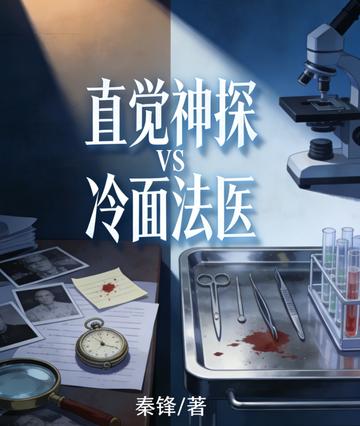
Xiao Chen, the genius of the criminal investigation team, relied on "situational empathy" to get to the heart of the murder case. Lin Wan, the chief of the forensic center, believed in "evidence first." This pair of "fire and water partners" with opposing ideals were forcibly bound by a series of imaginary murder cases in the city.
The first case of "mirror death" turned into a dead end: the death of the deceased was exactly the same as the niche online article, there were no clues at the scene, and the two people almost destroyed key physical evidence due to disagreements in reasoning. Immediately afterwards, the murderer escalated his crimes, targeting colleagues in the special investigation team, and even tampered with evidence to frame Lin Wan. To prove his innocence, Xiao Chen left the special investigation team, and the two went underground to jointly investigate. Trust was repeatedly pulled amidst suspicion.
The ultimate crisis suddenly comes: the murderer uses public facilities such as subways and water plants as bargaining chips to force Xiao Chen to solve the case according to the "imaginary rules". One wrong step can trigger turmoil in the city. This time, Xiao Chen used "brain hole to counter brain hole" to set up a trap to contain the murderer. Lin Wan broke through the evidence framework and found the fatal biological evidence of brain hole's crime.
When imaginary crimes encounter real evidence, and when the water-fire partners completely surrender their trust, they not only expose the scam and find the real culprit, but also form an exclusive tacit understanding - break the situation with the empathy of the detective, use forensic evidence to find out, protect the peace of the city, and uncover all the crimes hidden behind the imaginary.