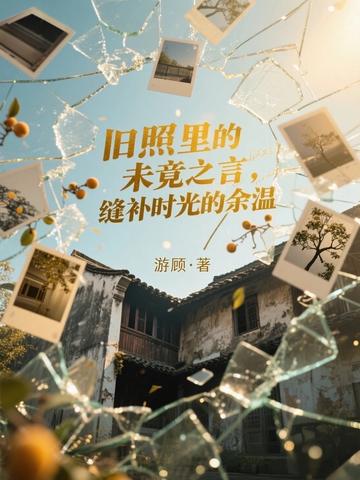
In the attic on the anniversary of my grandma's death, two old photos have become the key to unlocking time - one hides my waywardness when I was twelve years old and refused to eat when I threw the bowl, and the tenderness of my grandma's red rope; the other remembers my senior year in high school, when Shenyang Feng invited Jiangnan with starry eyes, but was extinguished by my "unrealistic" words. The moment my fingertips touched the photo, the guilt accumulated for half a lifetime tore apart time and space, allowing me to return to the scene of regret and rewrite the hurtful moment with my own hands.
But redemption is never free: every time we look back, the figures in the photos fade and disappear at a faster pace, grandma's smile gradually becomes blurred, and Yang Feng's outline twists and shakes; in reality, my mother suddenly fell ill because of my indulgence in the past. In the interlayer of the photo, Yang Feng's Jiangnan bookmark left during his illness and grandma's dusty notes on the secrets of the Republic of China revealed the shocking secret of "the traces of light and shadow, and the backlash of obsessions" behind the old photos.
I thought that tampering with the past would erase my guilt, but I found that every rewrite was overdrafting reality; I thought that seizing time would make up for my regrets, but I broke the taboo warning that had been passed down for centuries. With the intervention of photo restorer Lu Yanci, I finally understood: old photos are not prisons of time, and unfinished words are not shackles for life. This time adventure of fighting with regrets ultimately taught me how to move forward with the mark of love - boil a bowl of grandma's loquat paste, go to a late date in Jiangnan, and catch the warmth that had been ignored in the fireworks of reality.