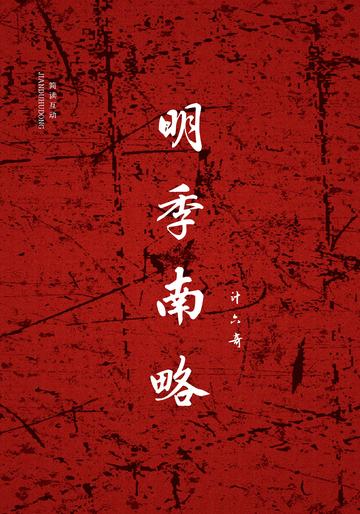
"Southern Strategy of the Ming Dynasty" is an important historical and chronicle work written by Ji Liuqi (also known as Yongbin, nicknamed Tianjiezi, and Jiufeng Jushi) in the early Qing Dynasty. It consists of sixteen volumes. It mainly describes the historical process of the Southern Ming regime and Zheng Chenggong's fight against the Qing Dynasty and the restoration of the Ming Dynasty. It covers major events from May of the first year of Shunzhi in the Qing Dynasty (1644) to February of the fourth year of Kangxi reign (1665). It is an important source material for studying the political situation in the south during the Ming and Qing dynasties.
The book adopts a chronicle format, trying to describe the rise and fall of the Nanming regime, the anti-Qing activities of local separatist forces, and the military and political deeds of Zheng Chenggong and others with first-hand materials that the author personally experienced or collected. Ji Liuqi's sources of historical materials are very extensive. He quoted a large number of folk histories, archives, rumors, memorials and local chronicles, making "Ming Ji Nanlue" both documentary and popular narrative.
Reading "The Southern Strategy of the Ming Dynasty" is like experiencing the war and the tragedy of loyalty in the south during this turbulent era in Chinese history - from the establishment of King Fu's regime, the rise and fall of the rebel forces in various places, to Zheng Chenggong's organization of forces to resist the Qing Dynasty and hold on to the south of the Yangtze River, to the final decline of the Southern Ming Dynasty and the continuation of resistance. It not only provides historians with first-hand insights into the political, military and social changes of the Southern Ming Dynasty, but also allows ordinary readers to see the entanglement between the fate of characters and the survival of the country at the historical node of the Ming and Qing dynasties. It is an indispensable classic historical material for studying the situation in the south in the late Ming Dynasty.