In the 14th year of Zhengtong, the blood of Tumu Fort has not dried up, and the capital is in a storm.
Different from history, Zhu Qizhen has fallen into Mobei and died in a foreign land.
The fate of the Ming Dynasty hangs on a thread, the court is torn apart, border troubles arise, nobles are entrenched, and refugees are everywhere.
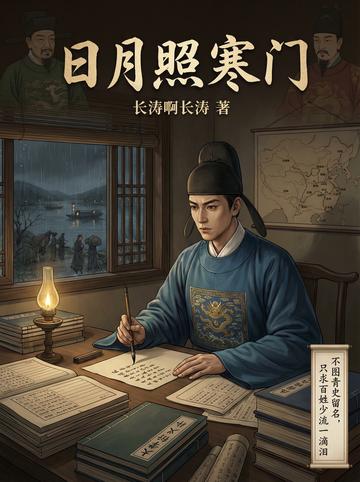
Zheng Qi (zichuang), a young man from a poor family in the south of the Yangtze River, was reborn with the knowledge of history five hundred years later. He had no golden fingers and could only rely on hard study and sobriety. He knew that Yu Qian should not die and that Emperor Jing should be established. He also knew that saving the country did not lie in the death of loyal ministers, but in the rebirth of the system. After being closed for ten years, he passed the exams of Xie Yuan, Hui Yuan, and Zhuang Yuan, and entered the Hanlin Academy as editor of the sixth rank. He had a humble position but a high ambition. Don't compete for fame or get involved in party disputes, and focus on practical application of the world: observe the public sentiment, manage tax abuses, and promote the prototype of the one-whip law; adjust the North-South, ease party disputes, and establish a prototype Senate system; restructure the powers and responsibilities of the six ministries, and replace empty talk about qualifications with "meritorious work". He never tried hard to challenge the powerful, but quietly planted the nails of the system; he did not claim to be a savior, but he made the water transportation, business and tax officials, and border troops well paid, and the poor families had a way out. Yu Qian asked about his ambition and replied: "I don't want to leave a name in history. I just want the people to shed less tears and the Ming Dynasty to live one hundred more years." In the end, with a simple diet, he took charge of the center, supported the collapse of the building before it fell, and rewrote history gently but firmly with system, patience and foresight.