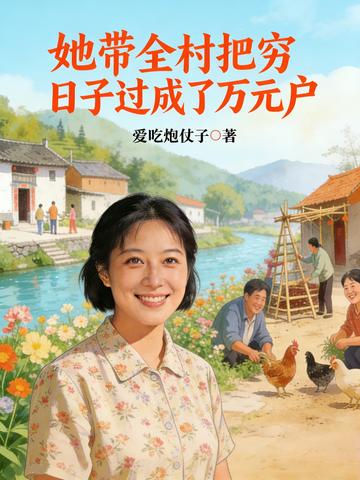
In 1983, Lin Xiulan, a woman from Qingshiyu, traded a silver bracelet for five yuan and a business opportunity that drifted away on the wind.
“Beijing is short on hawthorn berries. We’ll take as many as you can get.”
The whole village laughed at her. Could wild fruit rotting in the mountain valleys really be turned into money? Hadn’t the crackdown on the “capitalist tail” hurt enough in past years?
But she saw a glimmer of light through the cracks. She traded her dowry for ten Angora rabbits and worked the abacus under the old locust tree at the village entrance: one doe, three litters a year, six kits per litter, and in six months you could shear...
Trust was scarcer than money.
This is not the tale of a genius.
It is the story of a group of people, their backs bent beneath the mountains and poverty, learning to stand tall for the first time.
From starting with twenty yuan to having twelve households in the village worth ten thousand yuan each;
from secretly selling rabbit fur to landing a provincial export contract for “Green Hawthorn” preserves;
from former director Zhang Fugui slamming the table and roaring, “This is going backward!” to county officials driving into the village and clasping her hand, saying, “You are a pioneer of reform and opening up.”
With every stitch and every small saving, they carved a way through the mountains of poverty that had shaped their fate.
What they reclaimed was far more than money.
This is the story of a village’s entrepreneurial journey,
and the story of a generation awakening to its own dignity.
“Mom, here’s your silver bracelet.”
“No, you keep it. It isn’t just a bracelet, it’s courage.”
“I’ll earn my own courage.”
Lin Xiulan looked at her daughter’s bright eyes and knew that the spring breeze that had begun in a mountain valley in 1983 had already entered the next generation’s blood.