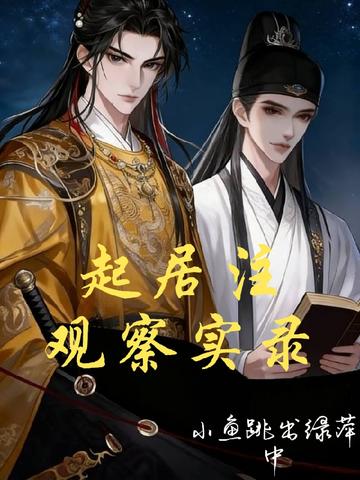
On the surface, he is a dramatic actor, but on the inside, he lacks love. The emperor attacks Xiao Chen × He looks old-fashioned but is actually gentle. The historian is influenced by Gu Qingzhu
[My perfect image was completely destroyed by him! Be diligent and love the people? Great talent and great strategy? No, my daily life is - jumping crazily on the tip of the historian's pen!
In the first year after he ascended the throne, Xiao Chen opened his daily notebook, and his vision went dark: "One day at midnight, a butterfly fluttered in the Imperial Garden, but missed."
You Gu Qingzhu, do you even remember this? !
From then on, the king embarked on the arduous road of "image transformation": farming to show frugality, visiting the wise at night, reducing taxes to show benevolence...
But the historian, who was as cold as jade, still wrote as sharp as a knife: "I plowed the fields myself, and my clothes were stained with mud in three places." "Visited at night, and slept in the corridor for half a moment."
Xiao Chen gritted his teeth: Did he pay special attention to me?
Gu Qingzhu believes in eight words in his life: The history pen is as iron as iron, and he will not move every word.
Until he met this emperor who was jumping up and down to get good reviews.
Remember that he stayed up late to review memorials and was rewarded with a palace lantern;
It is remembered that his charioteer was injured in the battle, and he waited all night and was panic-stricken;
Remembering his sincerity under the moon, he made an exception and added a line of small words in the corner of the history book: "It is night, the emperor and his ministers are in a heart-to-heart relationship, and the stars and the moon are the proof."
Later, the court was in an uproar, scolding the historian for confusing the king.
Xiao Chen held Gu Qingzhu's writing hand in public: "My merits and demerits in this life will all be paid to your pen."
Gu Qingzhu lowered his eyes and slowly wrote in the newly revised historical records:
"The notes on daily life not only record political affairs, but also record the king's heart and human feelings. This is called - truth."