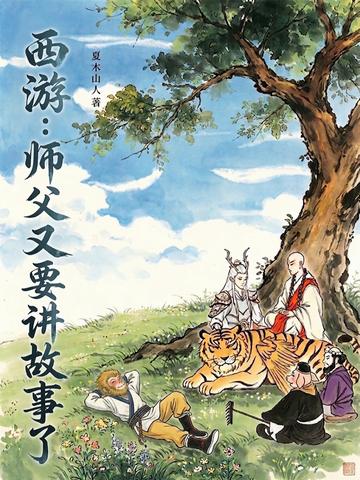
Journey to the West: Master Is Telling Stories Again
西游:师父又要讲故事了
- Status
- Ongoing
- Length
- 967k Words
- Genre
- Eastern Fantasy
- Subgenre
- Eastern Cultivation
- Audience
- Male
- Updated
- 1h ago
- Source
- Fanqie
Stats
Tags
Honours
Synopsis
Reader comments
In booklists 97
Explore more →
Completed Version of the Book of God (9.0 or Above)
These Are Probably the Only Books with a Score of 9.8!
Tomato Live Audio Novel Ceiling
An introduction to Tomato's Ceiling, a live-action audio novel
A Top-Notch Book, 9.8 Will Throw It Away After Ten Chapters, 9.7 Will Stop After Five Chapters
It's too bookish, but my appetite is too strong. One hundred thousand people who are browsing it will quit after reading thirty chapters at most. The Dragon King who read more than four hundred chapters from the beginning has given up on Zhan Shen after twenty chapters.

Fengshen T0 Level Work, Tomato Is the Eternal God! ! !
I want to read a book similar to "The End of Ten Days".
High-Quality Novels You Can Stay up Late to Read
Please Introduce Your Favorite Book in Tomato
There are more stories about heroes, villains, history, time travel, urban, prehistoric, farming, time travel, and systems.
Looking for Fine Chaff, Haven't Seen It for a Long Time
I came to Tomato just to watch God of Death. After watching it, I didn't encounter any problems. My desire to read has been very weak recently.
I've Become Numb to Reading, and No Novel Can Arouse My Interest Now, Jiu Min
Can anyone help me? I'm tired of reading it. Is there any novel with novel themes and good writing that can keep people reading? I beg you! ! !
9.9 Points, Worth Chasing All Night Long! ! !
I want to watch content similar to "Wanwan is not Wanwan: Who still loves you after being reborn". The plot is novel and exciting, and the more you watch it, the better it gets!
A Masterpiece That You Can Stay up Late to Watch
I Am in a Period of Aesthetic Fatigue and I Am Looking for Novel and Eye-Catching Novels.
Advanced Book Waste Area (Novices Enter by Mistake)
There Is a Shortage of Books and My Eyesight Is Too High. I Can Only Rely on These Few Books to Survive.
There is a shortage of books and my eyesight is too high. I can only rely on these few books to survive.
I'm Tired of Books, so I'm Looking for Books That Really Make People's Eyes Shine.
Everyone can only recommend the top one in their mind, and don't recommend some that have falsely high ratings. I have read most of the famous books, and I want something new
These Should Be the Ceiling of Fan Fiction.
Book Recommend Human Eternity: Conquest of the Starry Sky
Take Out Your Shelf Book (Only One) and Let Me Appreciate It.
I want to read a book like "Quick Time Travel: The Yandere Boss He's Fierce and Clingy". Only one copy. If you think it's super, super, super good-looking, you can only get one copy.
Nothing Can Be Seen! ! ! ! Please Recommend! ! !
We don't want campus stories, we don't want the heroine to go to school! ! ! Please recommend me, I've been short of books for a long time! ! !
The Best Book I've Ever Read on Tomato
I want to watch content similar to "Black (Pianmen Shen Bureau)". Ps: Don't recommend books with the word "depression" in them, and don't recommend books about zodiac signs. Thank you for the psychology of killing people. To recommend books, just recommend the books you like, new authors
Seriously Tired of Books! ! Are There Any Good Books That Make People's Eyes Light Up? Asking for Books!
I want to read a book similar to "The Age of Discovery".
Fine Chaff! Fine Chaff! Fine Chaff! , the Best Book I Have Found so Far
I want to watch something like "In my old age, the beautiful witch uses me as a furnace!" Book.


I think this book is a masterpiece far beyond the normal level of Tomato. Putting aside Buddhism and thoughts, this is far beyond what Tomato Universe needs to discuss. Speaking of writing style alone, without exaggerated rhetoric or rendering, ordinary words can accurately describe the scene and atmosphere. The description of the characters is even more outstanding. Everyone on the Buddhist scriptures team is vivid and lifelike through the language, actions, expressions, etc. During the narrative process. The most important thing is the story. Without changing the main tasks and form of the original work, every small storyline is quite attractive. They are obviously familiar characters and scenes, but the author has given them new life and ideas. Around the development of the story, everyone in the protagonist group is growing, rather than repeating it in a facial expression. Although there are TV series, games and other masterpieces before it, this book does not lose any of its charm!
This version of Tang Seng has a clear perspective and is very powerful. He is not hypocritical. It can only be said that he is indeed capable. The author has put a lot of effort into writing, and it is complicated to check the information, but it is very comfortable to read. Already surpassing 99.8% Of other fans
This sentence is very nice. I have always been misled by Monk Tang in Journey to the West. The real Monk Tang was braver than anyone else. He sneaked to the West to seek Buddhist scriptures without passing the Wendie customs, and became a famous monk in history. How could he be the monk in Journey to the West who only traveled to the West, did not know right from wrong, and showed false compassion. Another point that is also better is that other novels are either helping Buddhism or Taoism, anyway, they are helping this or that. Anyway, most of them are helping Taoism, and then there are a lot of conspiracy theories about Journey to the West. Anyway, I can only say that this book is a masterpiece, with a rating of at least 9 points! I can only say that a bunch of five-star reviews are unreasonable. It can be said that it is 10,000 times better than those conspiracy theories about Journey to the West.
Good looking. If the original version of Journey to the West gave me a kind of "Theravada Buddhism" to help myself, then this version written by the fan is more like the "Mahayana Buddhism" to help others and myself. I have only read about thirty chapters and I am already looking forward to what comes next, and I can see that the author has written it carefully. In addition to quoting Buddhist scriptures, there is also self-understanding. It looks very gentle and comfortable. I look forward to finishing the book [Sending my heart]
The writing is so wonderful, I was attracted by the first chapter, and it can be seen that there is indeed an understanding of Buddhism. It's not a simple dark myth. To put it bluntly, there is no black or evil, it's just a matter of stance. If you can ask for help from yourself, why ask for help from Buddhas?
Really, really nice. Let me see a different journey to the west. Every sentence the author writes about the truth of Tang Sanzang is reasonable, and nothing he does deviates from this. The subject of "all living beings". And when encountering difficulties, he will overcome them. It really solves this problem. Fair and impartial. No one was ignored. This is a well-deserved holy monk. This saint's heart makes me feel physically and mentally happy and relaxed. Five stars, I must give it five stars. It's really beautiful. Everyone must come and see it. The master is the best Then, hello to the first senior brother, hello to the second brother, hello to the third brother, hello to the fourth brother, and hello to the fifth brother.
What a great book. How should I put it, at least it is a very novel perspective. He is different from the kind-hearted Tang Monk in the past. He feels like he has a Zen spirit? Anyway, it's very nice to watch. I read a book called Journey to the West before. Well, that book is pretty good too. But, well, this book gave me a really different feeling. All in all, it's highly recommended.
Needless to say, this is definitely one of the best Journey to the West fics on Tomato. Tang Monk is courageous and compassionate, and can make everyone believe in him. The author has definitely put in the effort, and there are many quotes from Buddhist scriptures, which is really good.
Cultural workers must be literate, this sentence shines here. Every allusion is well connected. When I read other novels, I basically jump through them because what I'm reading is a novelty, but I don't want to miss a paragraph here because every word of it is really precious. "Live in Zizhou, live in Ziyi." "The moon reflects thousands of rivers, each of which is clear, so why point out the future one by one. The cause and effect will follow the fate, and all living beings should rely on all living beings." "Spring rain does not force flowers to bloom on their own, and autumn wind blows leaves naturally. But don't worry about the results of doing good deeds. You will know when the season comes." "The land in your heart is barren and no grass will grow, so you must plow deeply and wait for the spring to clear up. A plow breaks the soil, and there are many good things. There is no need to rush the flowers to flourish." "The spring breeze does not cause the seeds to germinate, and the sunshine does not cause the trees to bloom." "Thousands of pounds of earth have laid down the roots but they are still strong. A single thought will make the buds bloom. Once the earth is broken and it goes up to the sky, the liver and gallbladder of the whole life will be cut off by itself!" This author is amazing, he has carved a way out of a story that others have written badly.
The holy monk in this article is like the original preacher of Buddhism in China. He is not afraid of life and death and uses his body to save people. There is compassion to save all sentient beings, but there is also the angry-eyed Vajra of Buddhism. Those who have not committed murder will save them, and those who commit murder indiscriminately will send them to see Ksitigarbha Bodhisattva to be saved by the Bodhisattva. If you can't imagine it, you can watch a documentary about the ascetic practices of monks at Dabei Temple in Liaoning. It's very shocking. There is also the protagonist's preference for the Great Sage. He seeks justice for Bajie in Gao Laozhuang, and refuses the little white dragon to turn into a white horse to ride him in order to protect the pride of the dragon clan. The most satisfying thing is to turn his back and ask Wukong to kill the robbers who are blocking the road. The reason is that beating them to death is to redeem them for violating the precepts, and watching the super release Qi! Highly recommend Biwen! Excellent product!
To put it bluntly, this is the most emotionally-written Tang Seng story I have ever seen. The arrangement of the ending is also the best adaptation of Journey to the West. The most important thing is that this Tang Monk has corrected his three views! It feels like the Hong Kong version of Ganghwa Holy Monk!
Dharma Reappearance: Recasting the Holy Monk's Daoguo in the Crack between Journey to the West and Black Myth "Journey to the West: The Self-cultivation of the Holy Monk" uses a very ambitious narrative ambition to blend the traditional epic of pilgrimage to the West and the dark philosophy of "Black Myth: Wukong". It reconstructs the spiritual portrait of the holy monk Xuanzang under the grand footnotes of Buddhist classics. This work is not only a modern translation of classical IP, but also an in-depth inquiry into Eastern spiritual philosophy. 1. Narrative reconstruction: retraveling the path of learning in reincarnation The core tension of the novel stems from the subversive setting of "Going for Buddhist scriptures? I've already been there once." When the holy monk returns to the Westward Journey with the memories and obsessions of his previous life, the linear narrative of "the original intention remains unchanged" in the traditional Journey to the West is completely broken. This reincarnation narrative forms a profound intertextuality with the spiritual core of "After becoming a Buddha, the devil's heart is not extinguished" in "Black Myth: Wukong". Echoes of Black Mythology: The work cleverly implants the core concepts of "Six Roots" and "Five Aggregates" in "Black Mythology", transforming Wukong's "inner demons" into "karma obstacles" on the path of the holy monk's practice. When Xuanzang holds the nine-ring tin staff, he is no longer facing a green-faced and fanged demon, but the self that has not been able to transform on the journey of learning from the previous life. This narrative shift of "seeking inward" sublimates the traditional plot of monster fighting and upgrade into an existential spiritual journey. The Awakening of the Holy Monk: The novel subverts the stereotype of Tang Monk as "foolish and kind" in the original work. He is no longer a passive tool for learning scriptures, but an enlightened person who actively chooses to return to the sea of suffering. This kind of determination to "do something even though you know it cannot be done" exactly echoes the spirit of the Bodhisattva Way in Mahayana Buddhism: "Unless hell is empty, you will never become a Buddha." 2. Footnotes on Buddhist philosophy: Using scriptures as bones to forge the soul of practice The author's citation of Buddhist classics is by no means a show-off, but uses the scriptures as the inner driving force to promote the plot and shape the characters. The continuity of the "Heart Sutra": from the time when Zen Master Wuchao taught the "Heart Sutra" to the holy monk's realization that "form is emptiness" at the Liusha River, the scriptures are no longer abstract teachings, but his guide to action in every life and death decision. When he recited "The mind has no worries, there are no worries, so there is no fear" in the confusion of the real and fake Monkey King, the readers saw not only the wisdom of Buddhism, but also a practitioner's self-transcendence in a desperate situation. The philosophy of emptiness: The work uses the words of a holy monk to give a modern interpretation of the Diamond Sutra's "All appearances are false". In the confrontation with the black myth Wukong, Xuanzang points out that the name of "Fighting and Defeating the Buddha" is just a sign. The real victory lies in "seeing that all five aggregates are empty". This deconstruction of the "name" makes the whole novel's philosophical depth far beyond that of ordinary online articles. 3. Spiritual Portrait: Transformation from Ordinary Monk to Enlightened One The most moving thing about this work is that it creates a flesh-and-blood image of a holy monk full of contradictions. Obsession and letting go: The obsession with studying scriptures in the previous life has become the biggest obstacle to practice in this life. When he once again faced the ultimate torture of "why do I study Buddhist scriptures?" At the foot of Lingshan Mountain, he finally understood: the real practice is not to achieve a certain fruition, but to maintain compassion for all living beings in every choice. The power of compassion: In the novel, the saintly monk's compassion is no longer an undifferentiated "woman's kindness", but a kind of sobriety and determination after understanding the world. He transformed not only monsters, but also souls trapped by obsessions. This spiritual philosophy of "transferring others is translating oneself" gave the word "holy monk" a greater weight. All in all, "Journey to the West: The Self-cultivation of the Holy Monk" is a masterpiece that finds a perfect balance between classical IP and modern game narrative. It uses the dark philosophy of "Black Myth: Wukong" as an edge to cut through the spiritual core of the traditional Journey to the West; it also uses the wisdom of Buddhist classics as light to illuminate every step of the holy monk's practice. In this sense, it is not only an online novel, but also a spiritual hymn dedicated to all those who are seeking on the road of life. (Doubao AI generated [smile])
Nice! ! ! ! He is worthy of being a true holy monk, helping others, himself and all sentient beings. Every story has a meaning and every chapter is very touching [I'm about to cry] [I'm about to cry] [I'm about to cry] [I'm about to cry] [I'm about to cry] The great sage has also met his own master
It is very philosophically profound. The author has done in-depth research on Buddhist philosophy and the Consciousness-only Sect founded by Xuanzang. The protagonist has his own complete and profound thoughts. He can truly be called a holy monk, a generation of saints, instead of the ordinary devout monk in Journey to the West who is so pedantic that he is called a holy monk but you don't know where the saint is. What is depicted here is the official history Xuanzang. Compared with the official history Xuanzang in Journey to the West, Xuanzang is just a fake. It is as if Xuanzang, who traveled thousands of miles alone in history, overcame difficulties and obstacles, debated scriptures in Tianzhu without defeat, founded the Consciousness-only Sect, and became the greatest Buddhist scholar and seeker of that era, really appeared in Journey to the West.
The deduction of one star is not due to poor quality of the work, but mainly due to two considerations: first, the drama is dense and the rhythm is slow, which makes the threshold for ordinary online readers who are purely pursuing a sense of pleasure high, and the "educating in every difficulty" model has begun to become a routine; second, the world view and supporting characters have not been fully developed in the serialization stage, and the long-term narrative is still uncertain. But in the entire Journey to the West fan circuit, it is definitely a sincere work in the first echelon - it breaks away from the cliché of "the monk who traveled through Tang Dynasty cheated and slapped him in the face", and truly established the image of a saintly monk with character, wisdom and compassion. The conception and character creation are far beyond the average level of the same category. It is a work that can make people calm down and think after reading it, and it is well-deserved for its four stars.
It's a pretty good novel, at least it's not some trashy piece of fiction that just retreads conspiracy theories and prehistoric times. The author has his own views on Buddha, is willing to look up and study the materials, and has a plan for each character's arc. At the same time, Xiao Bailong, the fifth person among the four masters and apprentices, was not forgotten. In short, the fact that it is not a dark journey to the west or a conspiracy theory is really a plus ()
Very good! Not any ordinary stuff. Each character is highly consistent with the original image. The plot changes are reasonable and the rhetoric is exquisite. Highly recommend that everyone give it a try.
Tweet: This book surpasses most of Tomato's books. It is more like the author integrating his own understanding of Buddhism and salvation with Journey to the West to provide answers to the world's confusion about salvation and Buddhism. This book is not written according to conspiracy theories, but describes the true kindness, duty, and helplessness of gods and Buddhas. It combines the issues of human nature and divinity with the catastrophes of Journey to the West. It is not a pure fight, but digs out the depth of all the catastrophes in the original book to understand the good and evil behind the monsters and answer the human world reflected in the events. Add your own understanding into the original work, and write out the true goodness and shortcomings of God. The character creation is perfect. Xuanzang is the real one who can save the world and all things. Each of his disciples is also led to have their own understanding of people and use this as a clue to show their growth. The questions of each person trying to save a person from a catastrophe point directly to the goodness and cruelty in the world, and set up just the right twist to allow readers to think about whether this journey has really been completed and whether this statement is true.
The writing style is very delicate. I have been reading fast food articles for so long. This is the first time I slowly read the stories and Buddhist scriptures in them. But what attracts me most is that when we all feel that the story is complete, the author will always remind us of the injustices we ignore from another angle, and we can see the hardships of the small people through the magnificent chapters. The Xuanzang described by the author is really a saint, not only full of Buddha nature, but also full of humanity.
It is really awesome and has a unique angle. It uses the historical Tang Monk to travel to the Tang Monk in Journey to the West as the starting point to reveal the greedy and deceitful nature of Buddhism. To be honest, previous Journey to the West novels either used the perspective of Sun Wukong or some monsters to say that Buddhism is hypocritical and hypocritical, and then hit it all the way. , Or obstructing the pursuit of scriptures, etc., And this novel directly reveals the hypocritical nature of Buddhism from the perspective of Tang Monk, and also provides a solution. Each monster has a new ending. It is no longer a matter of returning to serve as an official after being defeated. Each monster paid its own price and atones for its actions. I can only say that the author is really awesome. I should have read Journey to the West at least a hundred times.
The author's writing style is very good and he has a good cultural foundation. He does not make any dark conspiracy theories about gods or Buddhas like other novels. The gods currently appearing, especially the senses of Guanyin, make people feel very good, and they are in line with his statement of great mercy. "The brocade cassock, or the bustling courtyard. When the fire comes, the gold paint melts, and the fire cooks the oil. What have you repaired?" This question really touched my heart. As long as the rhythm does not break, I should be able to keep pursuing it [heartfelt]
Different from the previous Journey to the West, the author's writing style is very close to my heart. I like to read it very much. I am moved by Elder Tang's compassion. In addition to the heavy story, this book also has some light-hearted and happy Wukong and Bajie bickering every day. Each character is carefully portrayed.
This Tang Monk's writing is very interesting. He writes about a real holy monk. There are many allusions to the Buddhist classics in it. It can be seen that the author has put a lot of effort into it. The book is not like those invincible articles that slap people in the face for no reason. All in all, it seems to be quite healing. The three creations in it are also very good. It does not look so frustrating and is quite reasonable. Many plots are very tear-jerking, so please have tissues ready when watching. I wanted to go to the author's bookshelf to see if he had any other completed works, but it turned out that this was his first book. When I saw the author's bookshelf, I really felt that he had worked very hard. There were a lot of classics, allusions, and insights and annotations on Journey to the West. It's so amazing, I can't even stand it. He would do so much to write a novel.
It's great. It has textual research on scriptures and Buddhist stories. These two points alone are enough to make it a good book. But more than that, the core of the story is very consistent with the historical Xuanzang. It is a good book. Just what I have seen about Gao Laozhuang is very thorough, and the grudge between Bajie and Cuilan is also very clear. When I watched it, I couldn't help but be moved to tears by the sentence "Thank you... The female donor". So far it seems that the author has put in a lot of effort and it is a very good novel adapted from Journey to the West.
It's good-looking, very good-looking. This book explores Journey to the West from a different perspective. From the perspective of the real Xuanzang in history, he practices Buddhism and debates scriptures, and saves all sentient beings. It combines and changes some plots of Journey to the West and black mythology. There are no conspiracy theories in the whole article. Gods are right and wrong for a reason. Bodhisattva is the true Bodhisattva, the Avalokitesvara Bodhisattva who saves suffering. Xuanzang taught everyone along the way, passed on Buddhist scriptures, and followed his own path. Wukong, Wuneng (Bajie), Wujing (Sha Seng), Wuji (Ao Lie), and a tiger demon are the current members of the Buddhist scripture collection team. Everyone has changed. The author added Buddhist scriptures and short stories into the book, which allowed me to understand it. Although I only had a partial understanding of it, I am extremely grateful to the author. It's a pity that there are too few chapters in this book. I hope the author will continue to update it.
Wonderful, wonderful. What would have happened if the original Xuanzang in history came to the world of Journey to the West? The plot is rigorous and interesting, both unexpected and reasonable.
The book is very good and has Buddha nature. The author has truly written about a holy monk who saves people. Friends who like this kind of book with principles and knowledge will definitely be very happy. However, I personally have a prejudice against Buddha for some reasons, so I felt tired after reading it, so I escaped first. But overall, this is indeed a good book and worth recommending. At the same time, I would like to thank the author for bringing this book to the world.
It took me so long to write a review. After reading the first chapter of this article, I thought it was definitely a rare good book. It turns out that although it is a long series, I really followed it patiently and did not skip chapters. Judging from how long I read, it was completely overwhelming. Xuanzang in this article is the one with the most practical Buddhist nature among the many derivatives of Journey to the West that I have read. As the prototype of Tang Sanzang in Journey to the West, his personal charm is completely greater than the golden finger of Buddha wheel added to him by heaven. He responded to difficulties and taught when evil happened. He taught each of the four apprentices well with his actions and words and deeds. He was willing to practice with the master instead of the master. Everyone has grown up in their own way, and everyone sincerely respects the master. Many of the classic plots of Journey to the West were cleverly conceived by the author. Many of the plot twists were unexpected by me. During the period, the stories told by Xuanzang were interspersed, which allowed me to understand many Buddhist stories and scriptures. After reading the whole story, many plots are still vivid in my mind. The most impressive one is the part about three fights with white-bone demons. It is completely reversal, reversal and reversal. It is amazing. Among many fast-paced Journey to the West spin-offs, this is a rare good article that makes people feel at peace when reading it. Personally, I think this Journey to the West spin-off is more outstanding than other "Burial of the Three Tang Dynasty" characters. It destroys the calamity of Journey to the West, exposes the dark side of Journey to the West, and dismantles the team of masters and apprentices to learn scriptures. It also tests the author's knowledge reserve. Maybe the destruction can bring people a sense of satisfaction, but the degree of transformation can make me have real admiration for Xuanzang. I have caught up with the dialogue between Xuanzang and Tripitaka in the latest chapter. I am really looking forward to the ideological collision between the prototype Xuanzang and the second creation Tripitaka, and also looking forward to Xuanzang's final trip to the West to debate scriptures!
I really want to give this Journey to the West fanfic 10 out of 10 stars. It breaks away from the clichéd power struggles, and does not have the intrigues of Lingshan and Heaven. It only returns to the most original meaning of learning scriptures - to save others and save yourself. The Tang Seng reconstructed in the book is no longer a pedantic and stubborn image, but a truly dignified, wise and kind-hearted holy monk. He educates the world with his words and deeds, and sticks to the right path with his true heart. Reading it makes people feel calm and moved. It can be seen that the author's scholarship is rigorous, his research is solid, and his writing style is gentle and profound. After reading it, it is not only a story, but also somewhat spiritually nourishing. Clean, pure and high-minded, it is truly a rare masterpiece.
It is quite well written, and the protagonist is a real enlightened monk. The author has made bold changes to Journey to the West, but it is not a conspiracy theory. There are many Buddhist allusions incorporated into the story, but it is a bit entertaining. Now that I have finished the praise, let's talk about the flaws. First, the author's writing skills are problematic, and the character creation is slightly deliberate (for example, the interaction between the master and the disciples does not feel the fun and freshness of the original work); second, the mechanism of the way of heaven. The system makes all the sacrifices of the protagonist return in another way in the end, and doing good without any price seems suspended. Thirdly, some paragraphs are too stinky, which affects the perception (such as the yellow ballad about Chang'e... Haha). Finally, the novel revolves around the protagonist, and the aura of Sun Wukong is reduced. Those who just want to see Sun Wukong may be a little disappointed, but I still think it is well written, and it is a rare breath of fresh air for tomatoes.