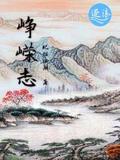
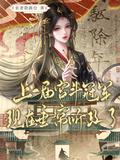
At the end of the Ming Dynasty, the sky fell, and the Qing Dynasty rode south. Ling Yi, the daughter of the Xue family in Wuxi, was not married but her husband died for the country. Before the engagement was finalized, a "loyalty" archway had been quietly built for her. He swallowed the ring and went to die, but was stopped by Li Zhen, the spirit of the century-old plum tree in the courtyard. He told her: Your flowering period has not yet come.
Since then, Xue Lingyi has been trapped in a triple net: externally, the remnants of her homeland regard her as a "lonely light" of integrity, and the new dynasty's powerful people regard her as a "model" of enlightenment; internally, the parents of the family are struggling between loyalty and survival, and regard her as the most precious bargaining chip and the heaviest burden; at the deepest level, there are thousands of years of chattering debates about "whether a virgin is appropriate or not", turning her flesh and blood into a cold battlefield of ideas.
In the gap between life and death, Li Zhen led her to glimpse the sighs and glimmers of women in the past dynasties that had been obscured by history. She began to wake up from the nightmare and dug out the manuscript buried under the plum tree, which was full of true feelings. When her father arranged a new marriage for her, and when various forces tried to put her on the altar, she said softly but firmly for the first time in the midst of the flying flowers: "I will not marry."
This is not a story about keeping a festival, but a legend about "breaking a festival". See how Xue Lingyi broke away from the fate of being written in the heavy rains of the soul. From the ancient aria "My heart steals the stone" in "The Book of Songs: Cypress Boat", she found the boat that belonged to "me". Among the cliffs of the torrent of history, she steered alone and sailed towards the open and unknown sea called "self".
"The Chronicles of Cypress Boats" - a eulogy about courage and independence played for thousands of unknown people.