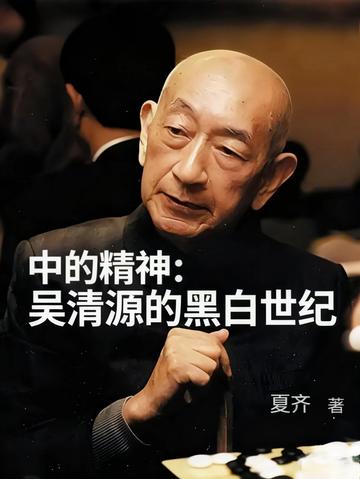
In 1914, a frail and sickly Chinese teenager came into contact with Go by chance. He never imagined that this nineteen-way chessboard would become his ark through the stormy waves of a century. From Fuzhou to Beijing, from his motherland to Japan, Wu Qingyuan's life is a condensed modern history - he used chess as a sword, used "new layout" to innovate Chinese chess theory for thousands of years, and punished the masters of the entire era one by one on the bloody arena of Shiban chess; he also used chess as a mirror, in the cracks between war, nationality and faith, to pursue the "neutral" state that transcends victory and defeat. This is not a myth about a victorious genius, but a story about how a lonely seeker protected the pure black and white in his heart amidst the torrent of time and the storm of his heart, and finally turned it into a star of human wisdom. Every piece that falls on his chessboard is a struggle and reconciliation with fate.
Reader comments
When talking about Wu Qingyuan, the master of chess in the Zhaohe era, what he seeks is not chess, but the Tao.
When talking about Wu Qingyuan, the master of chess in the Zhaohe era, what he seeks is not chess, but the Tao.