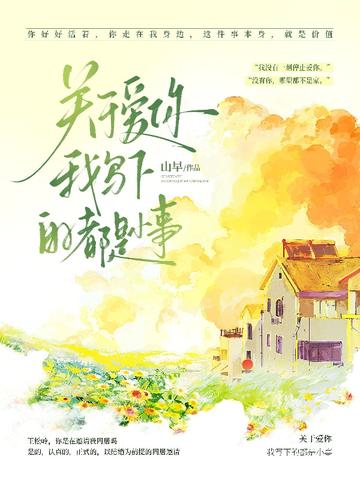
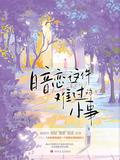
Of All the Things I've Written About Loving You, They're All Little Things
关于爱你,我写下的都是小事
- Status
- Ongoing
- Length
- 245k Words
- Genre
- Modern Romance
- Subgenre
- Workplace & Marriage
- Updated
- 7mo ago
- Source
- Fanqie
Synopsis
In booklists 9
Are There Any More Good Romance Novels on Tomato? I’m Tired of Reading Shallow, Amateurish Stories!
Modern Romance with Great Values and a Great Story
Everyone who clicks in will find something worthwhile. Leave your reading lists so we can recommend books to each other.
Looking for Highly Rated, High-Quality Modern Romance Novels

Urban Contemporary Romance

Any Good Modern Romance Novels?
I want a romance where they both choose each other. The male lead should be strong and the female lead shouldn't be weak, but she doesn't have to be a career powerhouse. It could be an age-gap romance with a younger man or an older guy 🤣
Looking for Tutor-Type Stories, Preferably with No Romance
Looking for content like *[Bungou Stray Dogs, Katekyo Hitman Reborn] Return*. It's about Katekyo Hitman Reborn.

Strong Female Leads in Contemporary Romance
A modern romance with a powerful, aloof female lead.
Waiting for Sweet Modern Romance Stories
I've been in the mood for modern romance novels. Any recommendations without the heroine getting drunk and instantly turning into a naive, airheaded girl? Little to no rivalry between women, and nothing too brainless. I'd like both leads to be each other's only partners, and the fewer side couples the better. Too many supporting characters really ruin the reading experience.
Any Fun Contemporary Romance Novels?
Whenever I look for novels, I have to scroll through the plaza forever. This time, I hope you all can recommend contemporary romance novels you enjoyed. Any genre is fine!
Reader comments 104
Translated by Google Translate
After reading the author's postscript, and then looking back at the whole story, you will be deeply touched. The author admitted frankly that the story originated from his own verification of "existence value", and the characters finally escaped from control and lived their own lives. This exactly explains why the story is so convincing - because it is not a carefully designed fairy tale, but a sincere exploration between the author and his own beliefs and the characters he writes. The "survival agreement" written by Wang Songling to Chen Jiaxi is not a silent "emotional agreement" that the author passes to every reader through this story: Please believe that you exist and you are worthy of being loved just the way you are at this moment. This clumsy yet firm belief is the most precious gift the story leaves us.
Chen Jiaxi grew up from a broken girl on a rainy night to a sharp prosecutor in the court, and then to a wife who put on a wedding dress and firmly said "I love all your imperfections"; Chen Li grew up from a child who hid behind his sister to observe, to a child who can comfort her sister and be able to stand up to the king. The boy who confidently asked for biscuits at home; Wang Songling grew from a technical youth who armed himself with a "system" to a husband and son who understood that "people's hearts need warmth" - everyone's growth trajectory is clearly visible, and every step is well-founded and unobtrusive.
This story is full of real roughness: the pressure of the workplace, the form of paperwork, the trauma of the original family, and the complex misunderstandings between people. But it bloomed the most idealistic flowers in the hardest soil of reality. That was two people with scars all over their bodies, relying on their almost stubborn beliefs to build an absolutely safe territory for each other bit by bit. It does not avoid the difficulties of life, but more vigorously praises the extraordinary power of repair, reconstruction, and mutual rescue in human emotions. It makes us believe that even in the wilderness, as long as two people are willing, they can grow a forest.
This book touches on humanity's most core emotional fears. Wang Songling's fear of "loss" stems from childhood trauma, which leads him to be overly protective and controlling. Chen Jiaxi's fear of "being a burden" stems from survivor's guilt, which leads her to push away in a self-destructive manner. Their love is essentially a long exercise in facing their fears together and learning how to protect each other correctly. In the end, they found a balance: love is not about eliminating fear, but choosing to trust and face it together despite fear. The exploration of this theme gives the story profound psychological significance and universal resonance.
Wang Songling's "hand control welfare" collection: the hand that turns the pen is slender and beautiful, the hand that tests the water temperature has clear joints, the hand that holds the glasses is clean and neat, the hand that holds hers is always clasped with fingers, and the hand that is placed on her lower abdomen when she has a stomachache is gentle and strong. This man can even act with his hands.
After reading this novel, I felt like I got to know the world again. The author's descriptions are very delicate and can make people feel the beauty and magic of nature. And the characters are also very fleshed out, which made me have the urge to become friends with them.
This novel contains profound moral and ethical questions. Through the characters and plots in the story, the author guides readers to think about values such as right and wrong, good and evil, and further reflects on individual behaviors and responsibilities.
The author shows the complexity of the human emotional world through delicate and in-depth plot description. Readers can follow the characters through various emotional ups and downs, thereby gaining a deeper understanding and feeling of the power of human emotions.
I hope that in that world for Wang Gong and Jia Xi, every morning's porridge will be just right, every late night hug will be firm and powerful, Black Ball will always be healthy and happy, and you will slowly grow older in each other's eyes. Be happy, this is a command, from a reader who is deeply moved by you.
Wang Chongshan and Chen Shouren represent two father images, one as silent as a mountain and the other as clumsy as a stone. But they all completed some kind of growth in the story: Wang Chongshan learned to express "This will always be your home" more directly, and Chen Shouren learned to use bankbooks and household registration books to replace hurtful words. Wang Songling is integrating these two qualities, which is both mountain-like reliability and a healthier education method for the next generation. This multi-layered exploration of the role of "father" is valuable.