After landing at Hangzhou Bay, the retreat of the 300,000-strong army was cut off.
The summit is still in a dream, and the retreat orders are changed in the morning and evening.
In the torrent of the great rout, the last order I received was to lead a remnant of the army and serve as the rear guard for the entire army.
Behind him is the most elite unit of the Central China Expeditionary Force.
In front of him were the disintegrated battle lines and the rout of troops with no end in sight.
But beside me, there were only nineteen brothers left, and one woman who was an expert in marksmanship but began to be afraid of pulling the trigger - my wife.
No reinforcements, no supplies. Collect ammunition from corpses, use booby traps to delay pursuing troops, and feign surrender in exchange for medicine.
Every decision is a cold arithmetic of human nature: Whose sacrifice will be used to exchange the lives of more people?
This is not a heroic epic, this is a record of survival.
When the ferry to Jiangbei is out of reach, we must answer in purgatory:
After abandoning everything, what do people rely on to survive?
Reader comments
At a time when anti-Japanese war literature is flooding in, "The Unknown Blood Monument" is a rare and weighty work. It abandons the conventions of commercial cool writing, does not use gimmicks and does not show blood. It only writes about war, human nature, family and country, and the perseverance of ordinary people in a sincere way.
"Four Elements of Solitary Monument" is not a heroic song of victory, but a war epic tempered with blood, fire and literary heart. It makes history step down from the textbook and turn it into specific people in the shadow of the warehouse: it is the historian's compassion in the scholar's eyes when he pulls the trigger, the twenty-seven homecoming obsessions engraved on the butt of the Orion's gun, and the despair and tenacity of the commander building a wall in the flood. The author uses scalpel-like strokes to cut open the abscesses of the times, but allows dignity and humanity to bloom on the ruins. This is not a cool article, this is a blood monument that reflects the wounds in the backbone and soul of the nation.
The images of Liu Yankai and Lei Tingyu are so vivid that they are heartbreaking. They are never omnipotent gods of war, but just ordinary people who rely on each other in the flames of war. There are weaknesses and fears, but there is also the tenacity to grit one's teeth and move forward, and the small tenderness in troubled times makes people's nose even more sour.
Come, the author read with me, and I solemnly swear: starting from today, I will never update. I will not watch dramas, travel, or get sick. I will play no games, no hydrology. Strict self-discipline, cherishing time like gold, perseverance, hard work, advocating first-class, striving for brilliance, taking pleasure in coding, being tempered into steel, and worthy of readers, worthy of youth, and worthy of the future. As an author, I solemnly declare: I firmly believe that I am an excellent author. Coding is my bounden duty. I have unlimited potential and am not afraid of hardship! I can code words diligently. I am a keyboard in the dark and a guard on the Great Wall of Internet. I voluntarily dedicate my life to code words every day and every night.
This book thoroughly describes the defeat and despair in the later stages of the Songhu Battle. The troops were routed by all the wounded soldiers, leaving only the radio station with noise, without the false courage of the Japanese. Only the most real and biting cruel background of war😍
Lei Tingyu is such a rare female protagonist. She has never been a labeled female war goddess, nor is she a vase attached to the male protagonist. She is a sniper with excellent marksmanship, is also afraid of bedbugs, and misses her hometown. She has a flesh-and-blood appearance, which is more moving than any cool character.
It completely breaks away from the routine of anti-war novels. There is no golden finger or cheating. It uses restrained and extremely invasive mosquitoes to rub the despair and brokenness of the chest into the rain curtain. Every stroke has a heavy sense of historical reality.
This book redefines heroism. The real hero is never the innately fearless superman, but the ordinary person who sees clearly the cruelty and despair of war, but still holds on to the gun and refuses to bow his head. They may be afraid, in pain, and cry, but they still use their flesh and blood to clear the way for the living. This persistence is the most powerful.
The most rare thing is that the anti-war core of this book is never an empty slogan, but from the perspective of two ordinary soldiers. Putting aside the longing for people caused by war, the sentence "One shot and one life clears the way for the living" expresses all helplessness and perseverance.
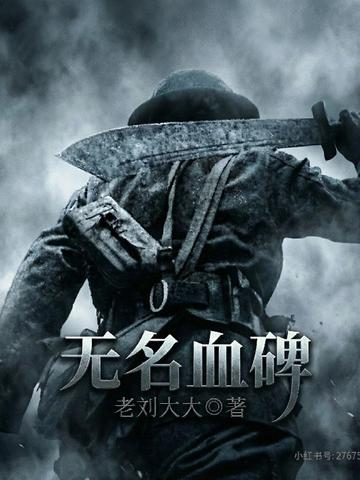
At a time when anti-Japanese war literature is flooding in, "The Unknown Blood Monument" is a rare and weighty work. It abandons the conventions of commercial cool writing, does not use gimmicks and does not show blood. It only writes about war, human nature, family and country, and the perseverance of ordinary people in a sincere way.
"Four Elements of Solitary Monument" is not a heroic song of victory, but a war epic tempered with blood, fire and literary heart. It makes history step down from the textbook and turn it into specific people in the shadow of the warehouse: it is the historian's compassion in the scholar's eyes when he pulls the trigger, the twenty-seven homecoming obsessions engraved on the butt of the Orion's gun, and the despair and tenacity of the commander building a wall in the flood. The author uses scalpel-like strokes to cut open the abscesses of the times, but allows dignity and humanity to bloom on the ruins. This is not a cool article, this is a blood monument that reflects the wounds in the backbone and soul of the nation.
The images of Liu Yankai and Lei Tingyu are so vivid that they are heartbreaking. They are never omnipotent gods of war, but just ordinary people who rely on each other in the flames of war. There are weaknesses and fears, but there is also the tenacity to grit one's teeth and move forward, and the small tenderness in troubled times makes people's nose even more sour.
Come, the author read with me, and I solemnly swear: starting from today, I will never update. I will not watch dramas, travel, or get sick. I will play no games, no hydrology. Strict self-discipline, cherishing time like gold, perseverance, hard work, advocating first-class, striving for brilliance, taking pleasure in coding, being tempered into steel, and worthy of readers, worthy of youth, and worthy of the future. As an author, I solemnly declare: I firmly believe that I am an excellent author. Coding is my bounden duty. I have unlimited potential and am not afraid of hardship! I can code words diligently. I am a keyboard in the dark and a guard on the Great Wall of Internet. I voluntarily dedicate my life to code words every day and every night.
This book thoroughly describes the defeat and despair in the later stages of the Songhu Battle. The troops were routed by all the wounded soldiers, leaving only the radio station with noise, without the false courage of the Japanese. Only the most real and biting cruel background of war😍
Lei Tingyu is such a rare female protagonist. She has never been a labeled female war goddess, nor is she a vase attached to the male protagonist. She is a sniper with excellent marksmanship, is also afraid of bedbugs, and misses her hometown. She has a flesh-and-blood appearance, which is more moving than any cool character.
It completely breaks away from the routine of anti-war novels. There is no golden finger or cheating. It uses restrained and extremely invasive mosquitoes to rub the despair and brokenness of the chest into the rain curtain. Every stroke has a heavy sense of historical reality.
This book redefines heroism. The real hero is never the innately fearless superman, but the ordinary person who sees clearly the cruelty and despair of war, but still holds on to the gun and refuses to bow his head. They may be afraid, in pain, and cry, but they still use their flesh and blood to clear the way for the living. This persistence is the most powerful.
The most rare thing is that the anti-war core of this book is never an empty slogan, but from the perspective of two ordinary soldiers. Putting aside the longing for people caused by war, the sentence "One shot and one life clears the way for the living" expresses all helplessness and perseverance.
Come on! Come on! Come on! Come on! Come on!