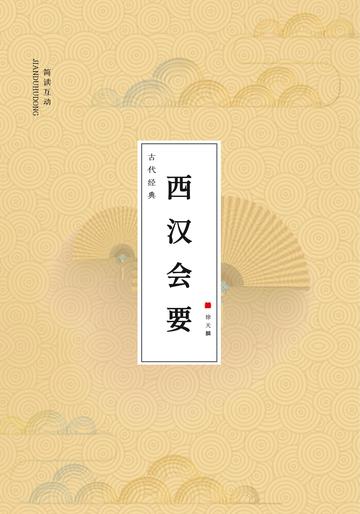
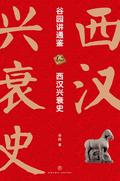
The Comprehensive Institutions of the Western Han is a systematic work on historical institutions written by Xu Tianlin, a Southern Song historian. Completed in 1211, it comprises seventy volumes and is one of the most important compilations of institutional history among traditional Chinese historical sources. The author, Xu Tianlin, courtesy name Zhongxiang, was from Linjiang, in present-day Jiangxi. He passed the imperial examination in 1205 and held posts including Doctor of Military Studies and local administrative commissioner. A scholar of deep learning, he devoted himself to organizing historical sources and examining institutions. Modeled on the Comprehensive Institutions of the Tang, the work classifies and compiles accounts of Western Han institutions found in official histories such as Records of the Grand Historian and Book of Han. It is one of the core texts for the study of Western Han institutional history.
The book is organized into fifteen categories: imperial lineages, rites, music, carriages and clothing, schools, calendrical systems, omens and anomalies, official posts, recruitment, civil administration, economy, military affairs, criminal law, geography, and foreign peoples. It presents Western Han institutions in the form of entries, covering not only the central political structure and administrative system but also civil society, customs, and other matters, in an effort to provide a comprehensive picture of the dynasty's political and social mechanisms. In compiling the work, Xu drew mainly on official histories and did not include miscellaneous records or informal notes, but its concise and rigorous structure has made it an important reference for institutional history.
As a systematic compilation of Western Han institutions and culture by a Song dynasty historian, The Comprehensive Institutions of the Western Han not only provides later historians with detailed, well-organized source material but also contributed to the development of the comprehensive institutional history genre in ancient China. It holds an irreplaceable place in the Chinese historiographical tradition, serves as an important text for understanding Western Han political institutions and social structure, and supplements and interprets the classic official histories.