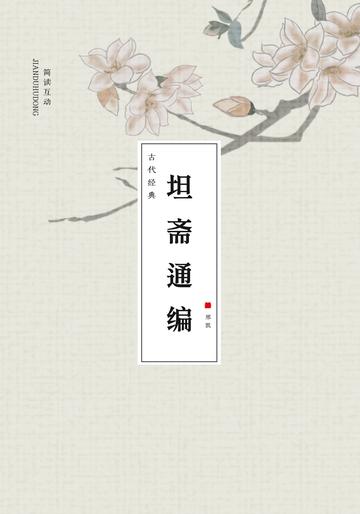
Tanzhai Tongbian is an ancient Chinese collection of erudite knowledge. It is traditionally believed to be related to Song Dynasty scholar Xing Kai. Although there is no detailed historical data on the author's specific identity and life, the work itself has unique value in cultural history. It is composed of one volume and compiles a large number of historical textual research and classical literature review items, covering many aspects such as historical textual research, regulations and systems, anecdotes, debates on etiquette and customs, etc., Showing the author's profound thinking and erudite spirit on the context of traditional Chinese culture.
The content format of the book is similar to a collection of notes and miscellaneous works. It not only quotes classic documents such as "The Analects of Confucius", "Hanshu", "Zuo Zhuan", etc., But also combines previous annotations and theoretical analysis for textual research. For example, it demonstrates the original meanings and errors of names of people and places in ancient books; it analyzes the rationality of rituals, sacrifices, and calendars; and it also puts forward its own opinions on folk cultural phenomena such as health preservation, divination, and numerology. Arranged in a logical manner, the whole work is not only a collection of knowledge, but also rich in dialectical and speculative colors. It is a manifestation of the general knowledge of ancient literati.
From the perspective of cultural history, Tanzhai Tongbian is not an ordinary note, but a reference text for miscellaneous examinations and academic commentary on classics and history. In the context that there was no systematic and popular version in the Song Dynasty, it provides precious clues for understanding the ideological concepts and historical attitudes of people from the pre-Qin to the Song Dynasty through the screening and arrangement of classics and popular news. The language of the work is concise and rich in academic theory. It is suitable for in-depth reading by readers who are interested in Chinese classical culture, historical textual research and traditional ideological systems. It also provides important materials for studying the academic trends of Song Dynasty, genre literature and literati knowledge system.