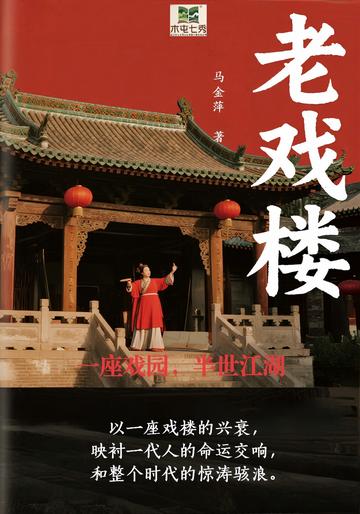
[Era + Political Movement + County Theater Troupe + Line Struggle + Life Choice + ] A theater, half a lifetime. The rise and fall of a theater reflects the fate of a generation and the turmoil of the entire era.
My name is Gan Niuzi, I was born in a small county in Northeast China, and I am the eldest son of my family. When I was 9 years old, it was time to go to school, but I couldn't afford the tuition. My neighbor Yang Chenglin is the leader of a county theater troupe. Yang Chenglin's wife gave my mother the idea to let me join a theater troupe to learn singing. In this way, I passed the interview, became a temporary student, entered the theater troupe's small class, and got the stage name Rufu. My master's name is Yu Sanli.
The troupe's office is an old theater with a history of three hundred years near my home, which is also a cultural landmark of the county. From then on, my artistic dream and creative career started from here.
After two years of studying in the small science class, I gradually understood that the theater troupe is also a complex world: some members come from the old team of the Cui family theater troupe before liberation. These people have profound skills, high professionalism, and focus on pursuing the beauty of art; another group of members have collectively transferred from the military district art troupe, and they all have revolutionary experience and have a firm class stance, but their performance skills are not that good; the new force is a dozen students from the small science class, who will make huge waves in the future.
As the political movement continues to deepen, theater troupes as cultural units are naturally the first to bear the brunt. As a result, various forces took turns to appear. County Cultural Bureau Director He Zhan'ao, group leader Yang Chenglin, secretary Jiang Zhaomin, office director Shen Jiuli, director Zhang Huairen, leading actresses Lin Bingxia and Xu Chen, leading actor Wang Hailin, my master and my wife, as well as the old-school and new-school artists behind them, as well as the latest rising young stars, all showed their talents and staged thrilling dramas in this old theater.
I am an inconspicuous little character. Because I am low-key and honest, I have become the target of various forces. I have been involved in the situation involuntarily, either actively or passively. Sometimes I let things take their own course, and sometimes I assess the situation. I have to protect my conscience and myself. Until I witnessed with my own eyes that the elites among those who had beautiful hearts and lotus mouths were lost in the torrent of the times one by one. In the end, I will not be washed up on the beach by the trend of the times and exposed to the sun. Instead, I will hold on to hope and continue to persevere...
Reader comments
From a poor boy who couldn't afford tuition, Busty Niuzi accidentally stumbled into a theater troupe and became "Rufu". He struggled to survive in the three-way game between the old team, military representatives and new students. This was not learning drama at all, it was clearly a thrilling "workplace survival story"! Life is like a play, it all depends on acting skills, but it also depends on confidence. In the torrent of the times and the complex rivers and lakes, those who seem to be glamorous and talkative may not have the last laugh. Instead, it is the "little characters" like the protagonist who are low-key and honest, hold on to hope and persist, who can weather the storm and hold on to the stage in their hearts. After all, after the tide recedes, only true ability and good character will be the eternal "corner".
"Old Theater" uses a century-old theater as the stage to tell the story of the ups and downs of Liyuan people's lives. Behind the gongs and drums, there are hidden changes in the world and joys and sorrows. The story depicts the perseverance and helplessness of opera artists. The end of the play tells the story of the ups and downs of the times and the vicissitudes of the world.
Clever narrative of objects and images
The old theater is not only the background of the story, it has witnessed the rise and fall of the theater troupe, the turmoil of the times, the melodious singing on the stage, and the changes in the world off the stage, using a small place to reflect the pattern of the big era.
2. Full characterization
Based on the experience of a young mangniu, it depicts the struggles, perseverance and choices of generations of opera practitioners in the tide of the times, and the persistence and helplessness of opera people are very vividly written.
3. Strong sense of era atmosphere
Combined with the realistic background of the development of the county theater troupe and the changes of the times, the play contains lyrics of sorrow and joy, and outside the play is the fate that ordinary people cannot control. The text is both pyrotechnics and historical.
An old theater building has witnessed decades of changes. Troupe artists have struggled to persevere over the years, and entanglements of love and hate intertwined with the ups and downs of the industry. The singing of the opera ended gracefully, the stories of the little people were evocative, and the helplessness of the disappearance of traditional culture was hidden in the faint regret.
An old theater building witnesses the ups and downs of generations of Liyuan people. In the book and the play, there is love and hatred, and outside the play, there is the world's ups and downs. The text is full of fireworks and ancient charm. It not only describes the difficulty of inheriting opera, but also tells the involuntary fate of small people in the great era.
The novel unfolds the narrative through the past of a busy young man in the opera house. The old theater house carries the youth and struggles of a generation. The singing voices on the stage are changing, and the fate of the people off the stage is ups and downs. In the changing times, the perseverance, helplessness and various situations of the world are written about the opera artists.
An old theater house has carried the story of the opera house for half its life, describing the ups and downs of opera artists, and reflecting the changes of the times through the rise and fall of the stage.
The square inch of the stage hides all kinds of things in the world, and the ups and downs of the theater building reflect the joys and sorrows of Liyuan people in the torrent of the times.










From a poor boy who couldn't afford tuition, Busty Niuzi accidentally stumbled into a theater troupe and became "Rufu". He struggled to survive in the three-way game between the old team, military representatives and new students. This was not learning drama at all, it was clearly a thrilling "workplace survival story"! Life is like a play, it all depends on acting skills, but it also depends on confidence. In the torrent of the times and the complex rivers and lakes, those who seem to be glamorous and talkative may not have the last laugh. Instead, it is the "little characters" like the protagonist who are low-key and honest, hold on to hope and persist, who can weather the storm and hold on to the stage in their hearts. After all, after the tide recedes, only true ability and good character will be the eternal "corner".
"Old Theater" uses a century-old theater as the stage to tell the story of the ups and downs of Liyuan people's lives. Behind the gongs and drums, there are hidden changes in the world and joys and sorrows. The story depicts the perseverance and helplessness of opera artists. The end of the play tells the story of the ups and downs of the times and the vicissitudes of the world.
Clever narrative of objects and images The old theater is not only the background of the story, it has witnessed the rise and fall of the theater troupe, the turmoil of the times, the melodious singing on the stage, and the changes in the world off the stage, using a small place to reflect the pattern of the big era. 2. Full characterization Based on the experience of a young mangniu, it depicts the struggles, perseverance and choices of generations of opera practitioners in the tide of the times, and the persistence and helplessness of opera people are very vividly written. 3. Strong sense of era atmosphere Combined with the realistic background of the development of the county theater troupe and the changes of the times, the play contains lyrics of sorrow and joy, and outside the play is the fate that ordinary people cannot control. The text is both pyrotechnics and historical.
An old theater building has witnessed decades of changes. Troupe artists have struggled to persevere over the years, and entanglements of love and hate intertwined with the ups and downs of the industry. The singing of the opera ended gracefully, the stories of the little people were evocative, and the helplessness of the disappearance of traditional culture was hidden in the faint regret.
An old theater building witnesses the ups and downs of generations of Liyuan people. In the book and the play, there is love and hatred, and outside the play, there is the world's ups and downs. The text is full of fireworks and ancient charm. It not only describes the difficulty of inheriting opera, but also tells the involuntary fate of small people in the great era.
The novel unfolds the narrative through the past of a busy young man in the opera house. The old theater house carries the youth and struggles of a generation. The singing voices on the stage are changing, and the fate of the people off the stage is ups and downs. In the changing times, the perseverance, helplessness and various situations of the world are written about the opera artists.
An old theater house has carried the story of the opera house for half its life, describing the ups and downs of opera artists, and reflecting the changes of the times through the rise and fall of the stage.
The square inch of the stage hides all kinds of things in the world, and the ups and downs of the theater building reflect the joys and sorrows of Liyuan people in the torrent of the times.