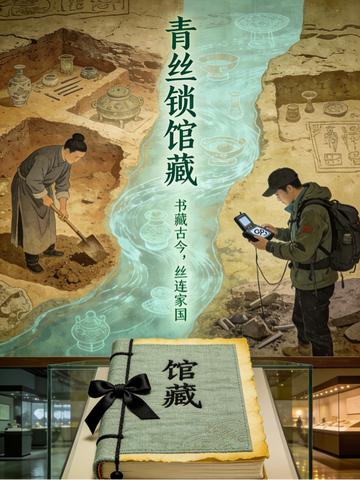
A sandalwood seal wrapped with blue silk, and thirteen important coastal defense weapons covered in dust on the reef, connect together a legend of protection that spans a century. During the Republic of China, the Japanese army under Matsumoto's command was approaching step by step. In order to protect the lifeline of coastal defense left by his ancestors, Su Wanqing gave up his pen and picked up chisels. He used the ancient technique of soaking rust in tung oil to protect the treasure. Together with Lu Chengyu's frontline defense against the enemy, the young man Shen Yan's treasure guard, and the fishermen and martyrs who sacrificed their lives to protect the treasure, they weaved a life-and-death protective net. Quicksand traps, tung oil fire attacks, and remnant enemy counterattacks, they narrowly escaped death among the rocks, with their black hair intact and their hiding spots intact. A hundred years later, the restorer Su Wan salvaged the seal with black hair, and Shen Yan's memory suddenly awakened. The details of the protection during the war, the lost ancient skills, and the sacrifices of the anonymous soldiers came to the surface one by one. Dual time and space overlap, and ingenuity has never been cut off. In the past, people used their lives to hide objects, and now people use their skills to pass on their souls. This is not only the protection of cultural relics, but also an inheritance of original aspirations across mountains and seas.