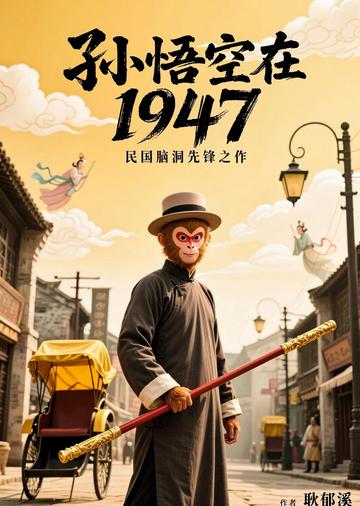
Geng Yuxi, the pioneer of modern Beijing-style novels, has a vernacular version of his 1947 pioneering masterpiece "The Monkey King in 1947"! When the Monkey King, flying in the clouds and mist, collided with the roaring tram on the streets of the Republic of China, the fierce collision between gods and the mortal world kicked off an absurd epic that spanned the world of immortality and yin and yang.
In 1947, the land of China was still engulfed in the flames of war. The post-war world structure was quietly reshaped, and the literary world was trapped in the constraints of realistic writing and traditional narrative. But Geng Yuxi found a new way to let the journey to the west master and apprentice break into this chaotic world: Sun Wukong was burned by the sparks of the tram, accidentally entered a house and was sprayed by a new type of insecticide.
Beneath the interesting plot is an ukiyo-e painting of a world devastated by war: people are displaced, their livelihoods are in ruins, and the desperate go to the sea to find their lives; modern appliances such as trams and sprayers are intertwined with New Year's Eve offerings and ancient folk customs such as the belief in the God of Wealth, in an absurd symbiosis. What's more, the underworld of the underworld is also tainted with secular customs. The king of hell imitates the world of the earth. Rich ghosts can be bribed to escape their crimes, but the poor undead cannot escape the oil pan. The humorous absurdity hides the biting reality, and the lines are full of profound questions about the times.
The vernacular version retains the avant-garde core and Beijing flavor of the original work. Open this book and watch the ups and downs of the Journey to the West masters and apprentices in troubled times, and understand the suffering and absurdity of an era in the absurdity.