The Dragon King lives on Beijing Subway Line 10:
Under the pressure of rent, I moved into a mysterious low-cost apartment at the bottom station of Line 10. The neighbors were very strange: the white-collar worker who was always wet, the aunt who carried a small incense burner... It wasn't until Jishuitan Station was closed for maintenance and the neighborhood committee notified: "Dear neighbors, please cooperate with the Dragon King to move the station, the line will be suspended for seven days." I realized that I had become the only human tenant.
Reader comments
"Notice of Sharing" is a stunning urban fantasy masterpiece. Using "half-price rent" as a guide, the author cleverly constructs a mythical community hidden deep in the Beijing subway - here there is a performance-anxious Zhenshui Jiao, a kitchen god who uses modern management software to assess incense, and a Baize cub who is proficient in PPT. The most outstanding thing about the work is that it is not a simple "myth invading modern times", but allows two civilizations to achieve subtle symbiosis in the collision of rules.
The novel takes "break-in-survival-establishing connections" as the main line, and through the perspective of the protagonist Chen Jian, readers are gradually introduced into this absurd yet real underground world. The mythical creatures described by the author are not distant legends, but "workers" who have to worry about KPIs, face the crisis of demolition, and need to deal with neighbor relations. This setting is both full of humor and a metaphor for the pressure of survival in modern society.
The greatest charm of the work lies in the construction of "bridges". The protagonist is not only the promoter of the plot, but also the translator and mediator of the two worlds - he teaches the Dragon King to write a work report using SWOT analysis, helps the Kitchen God develop a "simple offering plan" to adapt to the fast-paced life, and uses human legal means to resolve property rights disputes between spirits. Every time a crisis is resolved, it is a wonderful dialogue between the logics of two civilizations.
When the migration of Mengze requires a collective dream channel, and when the Xuanwu beast awakens and brings scrutiny from the ancient gods, the story explores a more profound proposition under the fantasy shell: How can tradition adapt to the new era without losing its authenticity? How do different forms of life find a way to coexist? These thoughts make the work go beyond ordinary entertainment novels and have a unique literary quality.
"Notice of Shared Tenancy" uses a basement with a monthly rent of 3,000 yuan to contain the cultural anxiety and survival wisdom of the entire era. It tells us: no matter how the world changes, those stories about protection, connection and adaptation will always have the power to move people.
The author writes well
Worth paying attention to and interested in, the more the merrier
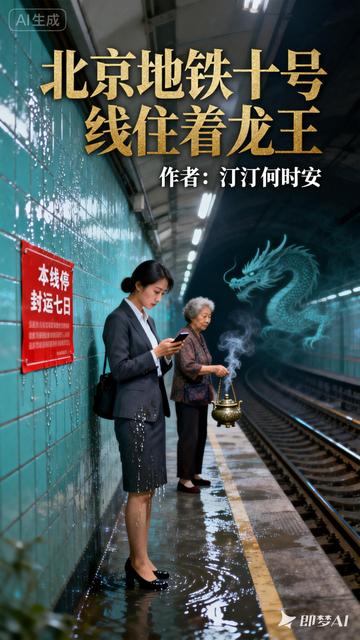
"Notice of Sharing" is a stunning urban fantasy masterpiece. Using "half-price rent" as a guide, the author cleverly constructs a mythical community hidden deep in the Beijing subway - here there is a performance-anxious Zhenshui Jiao, a kitchen god who uses modern management software to assess incense, and a Baize cub who is proficient in PPT. The most outstanding thing about the work is that it is not a simple "myth invading modern times", but allows two civilizations to achieve subtle symbiosis in the collision of rules. The novel takes "break-in-survival-establishing connections" as the main line, and through the perspective of the protagonist Chen Jian, readers are gradually introduced into this absurd yet real underground world. The mythical creatures described by the author are not distant legends, but "workers" who have to worry about KPIs, face the crisis of demolition, and need to deal with neighbor relations. This setting is both full of humor and a metaphor for the pressure of survival in modern society. The greatest charm of the work lies in the construction of "bridges". The protagonist is not only the promoter of the plot, but also the translator and mediator of the two worlds - he teaches the Dragon King to write a work report using SWOT analysis, helps the Kitchen God develop a "simple offering plan" to adapt to the fast-paced life, and uses human legal means to resolve property rights disputes between spirits. Every time a crisis is resolved, it is a wonderful dialogue between the logics of two civilizations. When the migration of Mengze requires a collective dream channel, and when the Xuanwu beast awakens and brings scrutiny from the ancient gods, the story explores a more profound proposition under the fantasy shell: How can tradition adapt to the new era without losing its authenticity? How do different forms of life find a way to coexist? These thoughts make the work go beyond ordinary entertainment novels and have a unique literary quality. "Notice of Shared Tenancy" uses a basement with a monthly rent of 3,000 yuan to contain the cultural anxiety and survival wisdom of the entire era. It tells us: no matter how the world changes, those stories about protection, connection and adaptation will always have the power to move people.
The author writes well
Worth paying attention to and interested in, the more the merrier