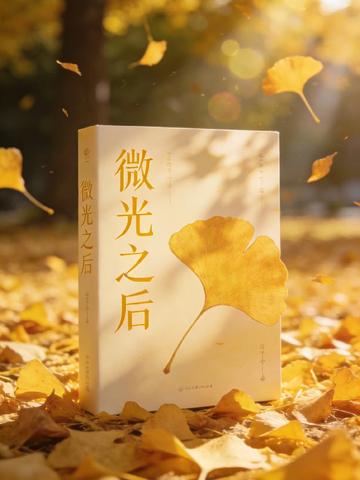
(Women's growth and self-reconciliation) The fallen ginkgo leaves of twenty years connect Su Meng's obsession and growth. Xiangyang is the glimmer of her youth, and Lin Wei allows her to understand the meaning of peace. From Rongcheng's mail to Jiangcheng's new house, from setting up a stall at the night market to the opening of "Light Picking Handicrafts", she finally understood that reconciliation means accepting the past, and the one who saves herself will always be herself holding the starlight.
Reader comments
This is not a story about reunion, but a monologue about "letting go." When Su Meng deleted the unsent draft, and when she put the ginkgo leaves into her diary, she finally understood: some stories do not need to be complete, and some feelings do not need to be expressed. Growth is never about forcing forgetfulness, but about turning "never forget" into "occasionally remembering", and turning "asking for but not getting" into "separately staying safe".
This is a heart-warming novel, a letter of reconciliation written by the author to himself and to everyone who has ever had regrets. Using "Ginkgo leaves" as a clue, it connects the time span of twenty years, from the mutual warmth of young interns to the sadness that things have changed many years later. The emotional presentation is restrained and heart-wrenching. We suddenly understand that those unspoken words and unavailable explanations eventually become the gentlest marks in time. It is not a love story, but a solemn farewell ceremony to the past self. In the dual perspectives of Su Meng and Xiang Yang, there is the most real regret and reconciliation. Su Meng's perspective is the longing that is soaked in tears and being pulled repeatedly, and the moment of confusion when the ginkgo leaves fall on the shoulders; Xiangyang's perspective is the restraint and aphasia of adults, the unspoken "I'm sorry" after the edges have been smoothed by time. There is no grand reunion, no bloody entanglement, only the fireworks of the two people in their own lives - it turns out that some stories are not unfinished to be continued, but unfinished. The most poignant thing is always the tenderness of "I made a happy ending for you and let myself go."
This is not a story about reunion, but a monologue about "letting go." When Su Meng deleted the unsent draft, and when she put the ginkgo leaves into her diary, she finally understood: some stories do not need to be complete, and some feelings do not need to be expressed. Growth is never about forcing forgetfulness, but about turning "never forget" into "occasionally remembering", and turning "asking for but not getting" into "separately staying safe". This is a heart-warming novel, a letter of reconciliation written by the author to himself and to everyone who has ever had regrets. Using "Ginkgo leaves" as a clue, it connects the time span of twenty years, from the mutual warmth of young interns to the sadness that things have changed many years later. The emotional presentation is restrained and heart-wrenching. We suddenly understand that those unspoken words and unavailable explanations eventually become the gentlest marks in time. It is not a love story, but a solemn farewell ceremony to the past self. In the dual perspectives of Su Meng and Xiang Yang, there is the most real regret and reconciliation. Su Meng's perspective is the longing that is soaked in tears and being pulled repeatedly, and the moment of confusion when the ginkgo leaves fall on the shoulders; Xiangyang's perspective is the restraint and aphasia of adults, the unspoken "I'm sorry" after the edges have been smoothed by time. There is no grand reunion, no bloody entanglement, only the fireworks of the two people in their own lives - it turns out that some stories are not unfinished to be continued, but unfinished. The most poignant thing is always the tenderness of "I made a happy ending for you and let myself go."