After the disaster that should have killed me, I barely survived, clinging to life.
I reached toward the sky, tears of despair streaming down my face, my body as cold as the villagers’ corpses.
Then, under the protection of the gods, I was reborn on this land, stepping over the departed souls of those who came before me.
By order of Ksitigarbha Bodhisattva, I became a chronicler, witnessing all the suffering in the world.
In every life, I am destined to be alone.
Gaze at the flowers blooming on the other shore, and forget life.
Stand before the Three Lives Stone, and look upon death.
They bloom for a thousand years and fall for a thousand years. Flower and leaf never meet. Love is not ruled by cause and effect; fate is bound to life and death.
A brief introduction to the characters
Since this story deals with an unusual subject and blends mythology and religion, I’ll include some researched religious terms as they come up. Not every term has been researched, though.
This is a partly fictional world, and the novel takes no position or offers any criticism. It is purely a work of fiction.
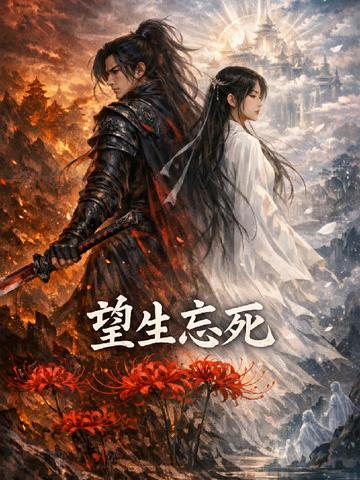
Fuling: She died in ancient times during a war between nations. At the moment of her death, she first met Ksitigarbha Bodhisattva, who took her in. Later, she was appointed a Recorder and given the ability to communicate heart to heart with living beings. She can read their past and present lives, and records the stories of the reincarnations of the underworld’s inhabitants to present to the Ten Kings and the Great Emperor of Dongyue.
Her birth name was Ling Xuanxi. After she joined Ksitigarbha, he named her Fuling.
Mo Yingyao (Yao): An Asura banished from the realm of the devas after the conflict between the Asuras and devas (the devas’ war of the Thirty-Three Heavens). He loves battle and good food, but deep down is a lazy spirit who hates trouble. Ksitigarbha Bodhisattva later took him in and appointed him deputy. He accompanies Fuling as she records the cycles of reincarnation.
His birth name was Ling Che. After he joined Ksitigarbha, the Bodhisattva named him Yao.