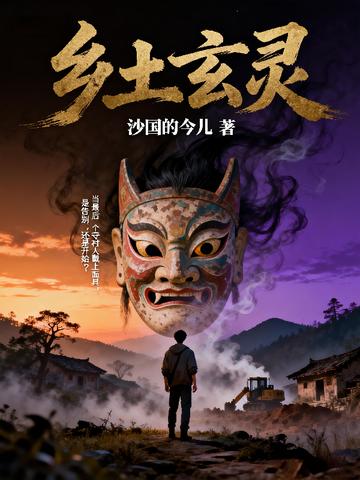
My name is Chen Qinghe, a graduate who is about to establish himself in a big city, but because his mother is seriously ill, he is forced to return to his hometown, Huaiyin Village, where he is dying.
I thought I was facing poverty and separation, until that night: my mother's skinny fingers pointed tremblingly out of the window, where a shadowless old man in an old-fashioned coat squatted at the base of the wall, smoking a cigarette. Later, I found my grandfather's straw substitute in the earth cave in the back mountain. It clutched the colorful Nuo opera mask tightly in its hand. The moment I touched it, the memory of my grandfather's lifelong role as a "villager guard" mixed with the ghostly roar of the mountain spirit rushed into my mind.
I was forced to inherit this title. Here, "cultivation" is not about ascension, but about learning how to negotiate with the old locust tree spirit lingering at the entrance of the village, guiding the lost "Youjiazi" soul in the middle of the night, and using ancient Nuo dance to appease the mountain god who was angered by road construction. Power comes from incense, land contracts and rules passed down from generation to generation. However, villages are collapsing in the wave of modernization, with villagers scattered and boundaries weakening. The developers dug up the roots of the mountain, black hair began to ooze from the abandoned ancient well, and the ancestral spirits in the ancestral hall sighed because of family disputes.
What I want to do is to put on that outfit amidst the roar of bulldozers and dance one last dance for the land that gave birth to me and is about to die. I want to know, when the last person who remembers the ritual passes away, will those "old things" devour everything first, or will I be able to find an ending to this centuries-long guardianship?