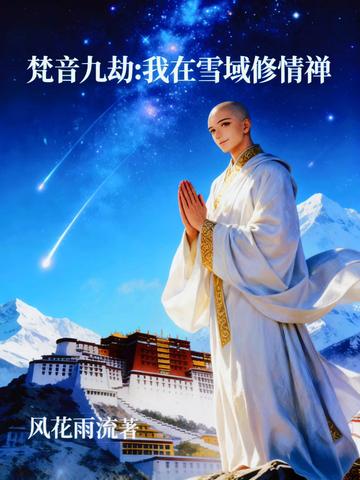
When he wrote, "How can there be a way to have both?" even the golden rooftops of the entire Potala Palace resonated.
At fifteen, Tsangyang Gyatso was forced to ascend the highest Buddhist throne in the snowlands, unaware that he was merely the final piece in the "Ninth-Life Love and Zen Experiment." The memories of his past lives were sealed, and this life was destined to tear him apart between his Buddha-nature and the mortal world.
Until the song of a girl who sold wine awakened the forbidden power in his blood: Love and Zen. Entering the Dao through emotion, taking love as his tribulation, every poem became a mantra to transcend suffering, and every flutter of the heart a breakthrough in cultivation. The love poems condemned as "heretical" turned out to be lost Buddhist chants from ten thousand years ago.
But in the shadows, countless eyes had already laid a vast, inescapable net:
Desi Sangye Gyatso wanted to imprison him forever in the golden-roofed cage.
The Mongol Khan wanted to use him to make a mind-controlling demonic parasite.
The ancient Brahma gods saw him as the final obstacle to severing worldly attachments.
Even the scripture master he trusted most harbored a shocking secret that could overturn nine lifetimes.
When the blood moon rose over Lhasa and the Twelve Brahma Pillars devoured the spiritual energy beneath the land, Tsangyang Gyatso saw the corpses of his first eight lives in the deepest chamber beneath the Potala Palace. It turned out that in every life, he had died for the same woman.
"This time," he said, wiping the blood from the corner of his mouth as a golden lotus with thirty-six petals bloomed in his palm, "I will make the Tathagata understand you, and you behold the Tathagata."




The mysterious Tsangyang Gyatso