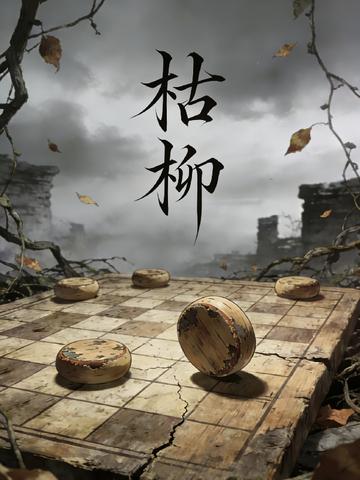
The world is a chess game.
Some people sit under the thatched eaves and hold their pieces, some place their pieces in the Golden Palace, and even more people become silent dust on the chessboard.
During the Qianqi period, Emperor Jingwu opened up the territory with his iron cavalry, occupied all the star positions, and held the heavenly source alone. However, he did not know that "the Yang pole will disperse" was a prophecy buried for him by his master on the bluestone slab in the mountain. He never realized until his death: the real killing move was never on the war-torn border, but behind him—the hollowed-out granaries, the cracked fields and the silent hearts of the people.
Thirty years later, Emperor Chess finally died.
The general wanted to imitate the "violent attack" and entered the palace with armor to force the young emperor, but he became the bait for the dagger in the sleeve of the powerful prime minister Qin Zhongxian. The moss has already spread from the stone steps in the mountains to under the dragon chair, and the damp power grows, intertwines, and backfires in the gaps where the sun cannot shine. A blood feast in the Golden Palace is just another game of "using yin to nourish yang".
The price of this game of chess is the starving states and counties, the border crossings where children were exchanged for food, and countless names curled up as "robbery materials" in the corners of the history books - generals, counselors, refugees, aristocratic families... Everyone is filling the era with their own flesh and blood, until the chessboard is soaked in blood and eventually withers into ashes.
Reader comments
Oops, it's so beautiful and the plot is so profound. [Laughing evilly] (Too lazy to open a trumpet.)

Oops, it's so beautiful and the plot is so profound. [Laughing evilly] (Too lazy to open a trumpet.)