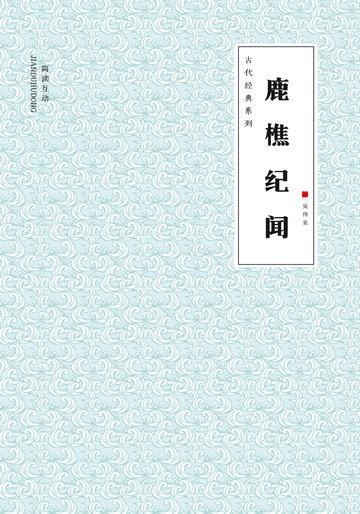
Luqiao Jiw en is an important historical chronicle written by Wu Weiye during the Qing dynasty. The original work was completed in the ninth year of the Shunzhi reign (1652) and is an important source for studying the peasant wars and upheavals of the late Ming dynasty. Written in both annalistic and event-based formats, it recounts the uprisings of rebel forces across Shaanxi and North China beginning in 1628, the rapid rise of peasant armies led by Zhang Xianzhong and Li Zicheng, the fall of the Ming dynasty, and the continued resistance of various Southern Ming forces. The work is divided into multiple volumes, each using three-character titles to introduce major battles and notable figures. Through its connected account of historical events, it gives readers a close look at the turmoil of the age and the details of profound social change.
In addition to recording major battles and rebel activities, Luqiao Jiwen intersperses written critiques and commentary, and includes memorials, rumors, and textual studies in its appendices. It thus combines historical value with reflections on ideas. Writing largely from the perspective of the Ming ruling class, the author comments on rebel forces, local powers, the Qing invasion, and other historical figures and events. He seeks to analyze the causes and course of the Ming dynasty's rise and fall from the intertwined perspectives of politics and warfare, giving the book significance for historical scholarship.
This work is an important reference for studying the transition from the Ming to the Qing. It portrays the complexity of the peasant uprisings while reflecting how intellectuals of the time observed and considered the changes of their era. Whether for professional historians or readers who want to explore Chinese history in depth, especially the upheavals of the late Ming, Luqiao Jiwen offers a rich, multifaceted historical perspective that brings to life an age of repeated wars and shifting regimes.