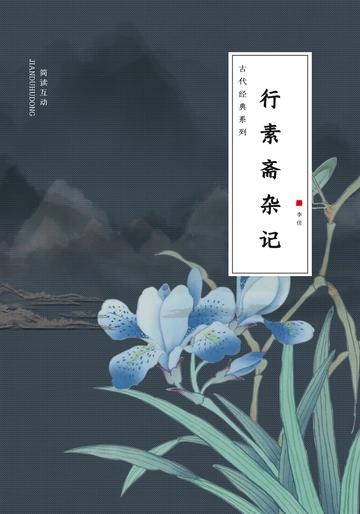
Miscellaneous Notes from the Studio of Plain Conduct is a valuable collection of historical notes by Li Jia of the Qing dynasty. The work’s full title is Xingsuzhai Zaji. It comprises two volumes and was printed in 1901 during the Guangxu reign. Copies are held in collections including the Tianjin Museum. This is no ordinary miscellany: drawing on years of personal experience and study, the author gathered fragmentary accounts of old Qing military council anecdotes, changes in the official system, stories from official circles, and the lives of notable figures. It is a close-up portrait of officialdom and social life in the late Qing.
The author, Li Jia, courtesy name Jichang, was a Qing dynasty jinshi who served, among other posts, as a secretary in the Grand Council. Much of what he records came from firsthand experience and observation, giving his notes the quality of a faithful record. They both trace major institutional changes and vividly describe the political rituals, details of the official system, and the civil service examinations of the time. Miscellaneous Notes from the Studio of Plain Conduct recounts major court affairs as well as local customs and social anecdotes. Its descriptions of how the Qing government operated, the inner workings of the Grand Council, and the daily lives of scholar-officials in particular allow modern readers to glimpse the realities of official and social life through its seemingly trivial accounts.
Unlike traditional official histories, this miscellany emphasizes detail and personal observation. Its plain language and rich content, ranging from imperial ceremonies and examination hall details to amusing stories of scholars’ social lives, capture the spirit of the age and the personalities of the people. It is an important primary source for studying late Qing political culture, government institutions, and social customs, and offers readers interested in Qing society a history that is both accessible and in-depth.