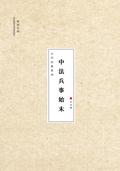
"The Beginning and End of the Sino-French War" is a small booklet of military and diplomatic historical materials compiled in notebook style written by Luo Dunzong, a famous literary and historical figure in the late Qing Dynasty. It focuses on the conflicts and war experiences that broke out between China and France in the late Qing Dynasty, especially the description of the entire process of the Sino-French War (also known as the Sino-French War). Luo Dunzong was born into a noble family in the late Qing Dynasty. He had been erudite since childhood and knew both general history and diplomatic and military affairs. Based on a large number of official memorials, military archives and newspapers and periodicals at that time, he combined personal observation and historical data comparison to systematically present the ins and outs of this key military and diplomatic event in China's modern history, allowing readers to see both the macro strategic background and the subtle changes on and off the battlefield.
The book not only contains a detailed description of the military operations of the two countries, but also analyzes the contradictions between China and France in negotiations, strategic deployment, and command decisions. From the conflicts between the main war faction and the peace faction within the Qing court, to the description of specific battles such as the battle for forts and the deployment of naval forces, they all strive to restore the complex situation and choices made by Chinese society during that period when it faced Western pressure. The author comments on the motivations of historical figures such as Li Hongzhang, Tang Jingsong, and Liu Yongfu, and reflects on the Qing court's response to foreign wars from a broader perspective.
This book is not long but has concise content. It can be used as an introductory book to understand the Sino-French war, and it is also suitable for readers who are interested in the military and diplomatic history of the late Qing Dynasty to delve into it in depth. It has both historical material value and narrative interest. It not only helps readers understand the war itself, but also prompts people to think about China's national choices and destiny in the context of an era surrounded by great powers.