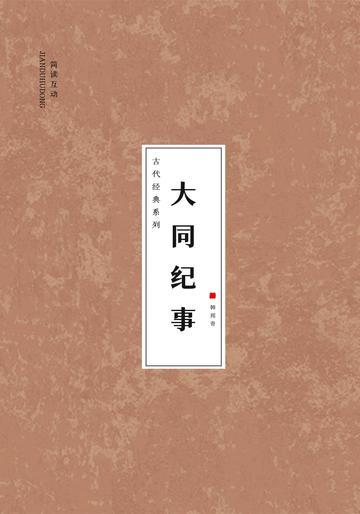
The Chronicle of Datong is a one-volume work of historical notes written by the Ming dynasty scholar Han Bangqi. It primarily recounts a series of political upheavals and military-administrative crises in Datong, Shanxi, and the surrounding area during the Jiaxu year of the Jiajing reign, around 1534. It is an important primary source for studying local political crises, tensions between soldiers and civilians, and official governance in the Ming dynasty. Combining his own observations with materials he collected, Han Bangqi provides a detailed account of the shifting fortunes inside and outside Datong, depicting not only the course of events but also the words and actions of those involved and the broader social context. This gives the historical narrative a vivid immediacy and rich detail.
The book first describes the conflict between soldiers and civilians provoked by Datong Governor Zhang Wenjin's efforts to defend the frontier and plan the construction of fortifications. It then recounts how Han Bangqi, an administrative vice commissioner, and the various military and political forces inside and outside Datong weighed their options and responded to the crisis. Wenjin ordered trees felled to build forts and strengthen the border defenses, but troop morale was shaky, sparking unrest and clashes. Matters escalated to the point that soldiers plotted to kill a deputy general. Han Bangqi repeatedly acted as mediator and commander, gradually stabilizing the situation through carefully judged measures, reconciling the two sides, and restoring social order.
Unlike conventional official histories, The Chronicle of Datong uses the form of historical notes, weaving together official memorials, recorded conversations, eyewitness accounts, and descriptions of local customs. Readers can thus learn not only the broader course of events but also gain insight into the state of mind of the officers and soldiers and the social tensions of the time. Written in plain yet finely detailed prose, the work is a valuable source for the study of local history in the Ming dynasty. For readers interested in frontier politics, soldiers' morale, and social governance during the Ming, it is a compelling work with considerable historical value.