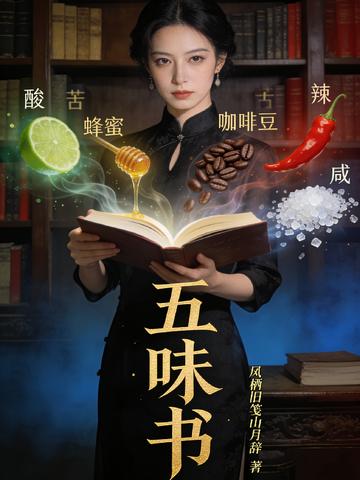
When Su Qinglan closed the "Royal Food Record", she never imagined that she would be transported into the ancient story she had just read and become the daughter of the imperial cook who was demoted because her father was convicted. What's worse is that if there is no noble person to appreciate it in three days, the whole family will be exiled to a bitter and cold place.
"Using tofu to make meat flavor?" Facing the only ingredients, this modern cooking master smiled. When she presented the "boiled cabbage" that looked clear and watery to the imperial envoy, he didn't know how this dish, which uses broth extracted through ninety-nine steps, would subvert the taste buds of this era.
Starting from saving his family, Su Qinglan's gourmet revolution is out of control: using icing technology to make summer crispy mountains, using the concept of molecular cuisine to recreate the lost "Wangchuan Tu Sample", and establishing the first "Wuweilou" with bright kitchens and stoves. Every innovative dish is an impact on ancient food culture, and every banquet is an undercurrent of power struggle.
And the imperial envoy who always appears at critical moments can taste the clues hidden in her "Jade White Jade Soup" and understand the hesitation behind the "three non-sticks". When he handed over the red sandalwood food box engraved with five-flavor patterns, Su Qinglan suddenly understood that the most touching words of love can be written without a single word.
In this era of scarce ingredients and conservative cooking, how can a modern cook change her destiny with a spatula? When food becomes a bargaining chip in the power struggle, how should she protect the "original taste of food"? From the imperial kitchen to the private sector, a silent revolution in taste is quietly changing the trajectory of this dynasty.